Sundridge, Ontario
>99.9%
reduction in cyanobacterial cell counts in 60 days
Water clarity improved, and the lagoon’s disc filters could keep up again.

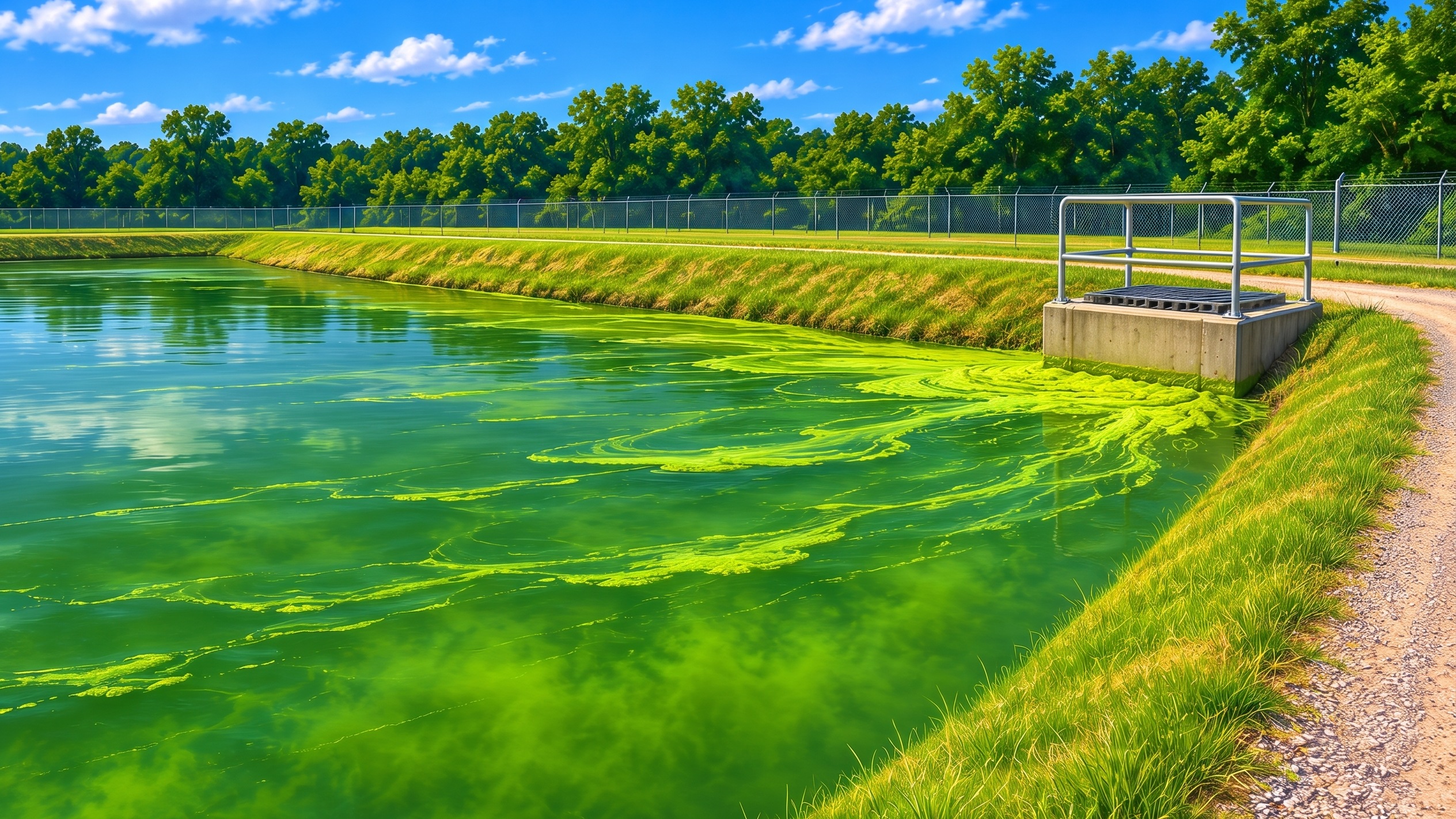
A lagoon can treat its wastewater well and still fail its TSS limit. That’s where the sewage lagoon in Sundridge, Ontario, was in August 2023. Cyanobacteria (blue-green algae) and green algae had taken over, cell counts had passed two million, and the disc filters downstream couldn’t keep up with the algae coming at them. Effluent readings were already over the limit.
Sixty days after continuous ultrasound went in, cyanobacterial counts were down more than 99.9%. The water cleared and the filters went back to doing their job, without chemical algaecides. Controlling algae inside the lagoon protects effluent TSS and BOD before the algae ever reach the outlet.
Facultative lagoons need some algae. In sunlight, algae produce the oxygen the treatment bacteria live on. The trouble starts when warm weather, sunlight, and nutrient-rich wastewater push growth well past what the process needs. The algae stay suspended, drift toward the outlet, and leave with the effluent, where they count as total suspended solids (TSS). EPA lists this as a known weakness of lagoon systems: algae in the effluent, especially in warm weather, can keep a lagoon from meeting a 30 mg/L TSS limit.1 With more than 7,000 facultative lagoons operating in the United States when EPA last counted, that’s a widespread problem.
The same algae drive up BOD. Algae that leave with the effluent keep consuming oxygen during the lab’s BOD test, so they count against your result just like poorly treated waste. A Pennsylvania permit record for a dairy’s wastewater lagoon shows how big that effect can be. When the operator compared filtered and unfiltered samples, about 80% of the effluent BOD came from algae rather than from the wastewater itself.2 Heavy algae growth also swings pH and oxygen levels between day and night, which makes the rest of the lagoon harder to run.
From there, the costs show up downstream in filter loading, chemicals, and operator time. We covered that side of it in Control Algae Upstream Before It Becomes a Downstream Problem.
Many lagoons don’t discharge year-round. In cold climates, operators often hold effluent through the winter, and sometimes through peak summer algae growth, then release it cell by cell during set discharge windows.1 A bloom that peaks during the discharge window puts the whole release at risk, and there’s very little time to fix it.
A bloom that peaks during the discharge window puts the whole release at risk.
Essex, Ontario, faced exactly that in spring 2021. Cell 4 of the town’s wastewater lagoon was thick with cyanobacteria ahead of its spring discharge, and the provincial environment ministry extended the discharge window to May 15 so the town could try ultrasound first.
At Sundridge, a floating ultrasonic platform from an earlier generation of SonicPure technology went into the lagoon in mid-August 2023, usually the toughest part of the season for algae. Cyanobacterial counts started above two million. Thirty days later they were down to 4,420, and after 60 days about 1,600, a reduction of more than 99.9% that held through late summer, when blooms normally have the upper hand. As the algae load dropped, the water cleared and the disc filters caught up.
In Essex, earlier-generation SonicPure technology went into Cell 4 on March 31, 2021. Thirty-three days later, cyanobacteria were down 78%, from 14.1 million to 3.16 million cells per milliliter. TSS stabilized, pH improved, and the surface algae visibly thinned out. Provincial sampling found no visible algal mats or blooms at the discharge, and microcystin stayed below the detection limit in all 11 samples from the lagoon and downstream.
Today’s SonicPure systems are built around the Pulsar 4400. It runs around the clock and emits approximately 4,400 targeted ultrasonic frequencies across two bands, cycling through the full set about every 70 minutes. In cyanobacteria, ultrasound disrupts the gas vesicles that keep the cells floating near the surface. The cells lose buoyancy, sink away from the light, and die without releasing toxins. Ultrasound also impairs photosynthesis and cell division, two processes algae need to survive and spread.
Lagoon algae rarely stay the same from month to month. Sundridge had both cyanobacteria and green algae, and knocking back one type often opens the door for another. More frequencies mean control of a wider range of algae types, so the Pulsar combats active blooms and suppresses future ones without anyone having to sample, identify, and reprogram as the season changes. We explain why in Why 4,400 Frequencies Matter.
One Pulsar covers up to 124 acres (a 400-meter radius) for cyanobacteria and 17 acres (a 150-meter radius) for green algae and diatoms. We work with each site on recommended Pulsar locations based on cell size, layout, and the algae present. The result is less algae reaching the outlet. SonicPure ultrasound reduces BOD and TSS and stabilizes pH, with no chemicals or copper buildup, and recurring algae treatment costs are reduced or eliminated.
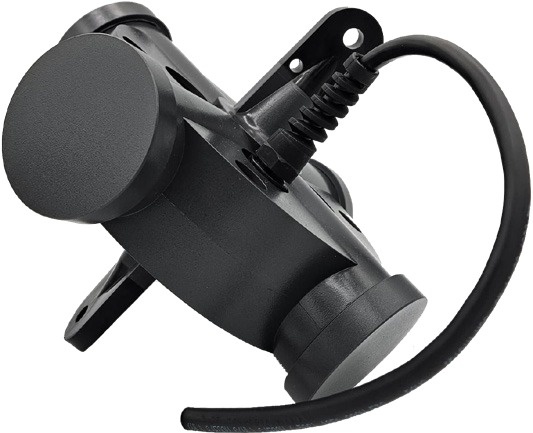
Every system is built around a Pulsar 4400, and there are three ways to power it. Where the lagoon has AC power, the AC Power Hub runs one or two Pulsars. At remote lagoons without grid power, Shoreline Solar mounts on the bank and also runs one or two. The Sentinel AIQ is a floating solar platform that carries a single Pulsar out on the water. Ninety percent of our customers install in under 30 minutes, maintenance takes about 5 to 10 minutes per unit every 2 to 4 weeks, and IQCloud telemetry means you always know your Pulsar is running and performing.
The same Pulsar also controls biofilm and biological growth in basins and clarifiers, including walls, weirs, and launders, so one technology covers algae and biofilm across the plant.
As long as a lagoon has sunlight and nutrients, algae will keep coming back. Continuous, chemical-free control keeps that growth in check before it reaches the outlet, the filters, and the sample your permit is judged on. SonicPure ultrasound is proven at 1,000+ installations worldwide, and Sundridge and Essex show what it does in a working lagoon. If algae are driving up your TSS, BOD, or treatment costs, let’s talk about your lagoon.
Start controlling your algae and biofilm today. Call +1 (310) 955-4005 or email sales@sonicpure.com to get started, or request a quote.
1. U.S. Environmental Protection Agency, Wastewater Technology Fact Sheet: Facultative Lagoons, EPA 832-F-02-014, September 2002.
2. Pennsylvania Department of Environmental Protection, NPDES Permit Fact Sheet, Vale Wood Dairy, Permit PA0009466 (draft), March 20, 2024.