


Algae Control Guide
This complete guide explains the types of algae that commonly cause issues, why blooms occur, the problems excessive algae can cause, and compares major algae control methods from chemical treatments to aeration to ultrasonic technology, including their pros, cons, and environmental impacts. We’ll also explore how SonicPure®’s ultrasonic technology works (with case study data), provide guidance customized to different audiences (home pond owners, municipalities, and industrial operators), and discuss when ultrasonic control isn’t the right solution and alternative measures to consider.

Types of Algae and Why Blooms Occur
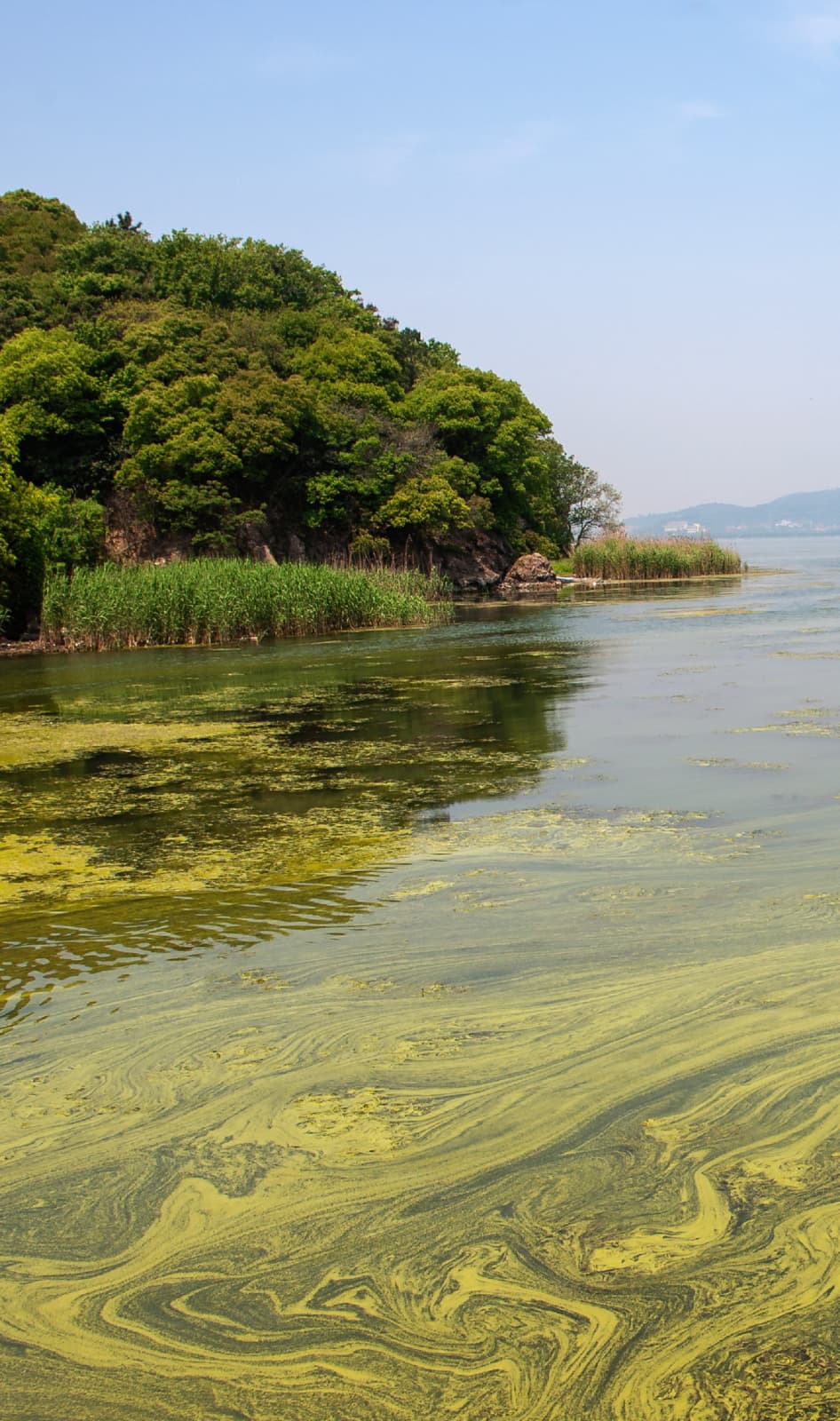
Planktonic algae consist of microscopic, free-floating cells that can turn water pea soup green (or sometimes brown or red) when they multiply. In small amounts, they form the base of the food chain and even help shade the pond bottom to prevent weeds. But uncontrolled planktonic blooms can deplete oxygen (especially at night or when they die off), sometimes causing fish kills. Because they’re microscopic, you usually notice them only when the water changes color or becomes cloudy green. Different species of planktonic algae cause different tinting.
For example, green algae turn water green, some diatoms make water brownish, and Euglena can make it reddish. Planktonic blooms often occur in nutrient-rich, stagnant water under warm, sunny conditions.
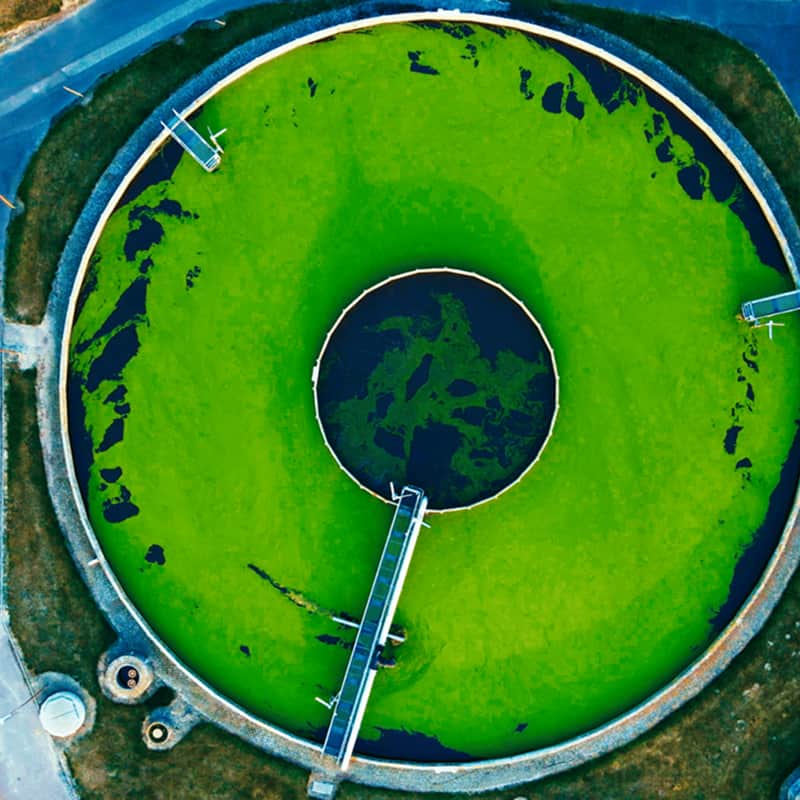
Filamentous algae, often called “string algae” or pond scum, are single-celled algae that link together into long strands or mats. They typically start growing attached to rocks or the bottom in shallow water, forming hair-like threads that can intertwine into thick, slimy mats that may rise to the surface as floating scum. If you’ve seen slimy green clumps or fibrous mats in a pond, that’s filamentous algae. These mats provide habitat for small aquatic critters, but they are unsightly and can cover shorelines or swimming areas. String algae thrive in warm water with plenty of nutrients and sunlight. They tend to bloom when ponds are stagnant, and nutrient levels (e.g., nitrogen and phosphorus) are high, often in mid-summer. Unlike planktonic algae that turn water green, filamentous algae are more obvious as tangles or “wool-like” mats on surfaces. While not usually toxic, heavy filamentous growth can choke waterways and harm aesthetics.
Cyanobacteria are often lumped in with algae because they also photosynthesize and form blooms in water, but they are actually bacteria. Often called “blue green algae,” cyanobacteria blooms are the notorious factors behind many Harmful Algal Blooms (HABs). These blooms can look like bright green paint slicks, pea soup, or even turquoise, red, or brown scums and often smell terrible. Cyanobacteria thrive in similar conditions to other algae (warm, nutrient-rich water), but are especially adept at outcompeting other species. Many cyanobacteria species can regulate their buoyancy with internal gas vesicles, allowing them to float to the surface for light or sink for nutrients. This gives them an advantage in stagnant, stratified water. The biggest concern: toxins. Some cyanobacteria produce potent cyanotoxins (like microcystins, anatoxins, cylindrospermopsin, and others) that can poison wildlife, pets, and people.
Microcystis is one common toxin-producing genus that often blooms in nutrient-rich lakes. When a toxic blue-green algae bloom occurs, it can contaminate drinking water, cause illness (or even liver damage) in people and animals, and force lake or beach closures. For example, Microcystis blooms in Lake Erie have forced cities like Toledo to halt water withdrawals due to toxin contamination. Even non-toxic cyanobacteria blooms can create taste and odor problems (earthy or fishy smells) in water supplies and cause skin rashes or irritation in swimmers. In short, cyanobacteria are some of the most troublesome “algae” to deal with due to their health risks and toughness.
Why Algae Blooms Occur
Algae are present in most water bodies, but blooms (excessive growth) happen when environmental conditions give algae the upper hand. The key drivers of algal blooms include:
- Excess Nutrients (Eutrophication): High levels of phosphorus and nitrogen in the water are the primary trigger for algal blooms. These nutrients often come from fertilizer runoff (lawns, agriculture), animal waste or septic leakage, sewage effluent, and organic matter like leaf litter breaking down. When too much nitrogen and phosphorus enter a pond or lake, algae feed on these nutrients and multiply rapidly. Nutrient pollution essentially “over-fertilizes” the algae. This is why blooms frequently occur downstream of agricultural areas or after heavy rains wash nutrients into a lake.
- Warm Temperatures: Algae (especially cyanobacteria) love warm water. Blooms are far more common in summer and early fall when water temperatures rise. Warm water speeds up algal growth rates. For instance, many harmful blooms occur during heatwaves or extended warm weather. Climate change is extending bloom seasons. Lake Erie’s toxic cyanobacteria blooms, for example, have increased with warming, even persisting into winter in recent years.
- Sunlight and Calm, Stagnant Water: Algae require sunlight for photosynthesis. Calm, stratified water with lots of sun penetration sets the stage for blooms. When water is stagnant (slow or no flow) and stratified (warm water sitting on cooler bottom water), nutrients can concentrate in the surface layer, and buoyant cyanobacteria can stay at the top to soak up the sun. Low or no water movement (for example, in small ponds or reservoirs during droughts) also favors algae. In contrast, water circulation or mixing has the potential to disrupt algae (more on that later).
- Low Oxygen at Depth: In stratified ponds, the bottom layer often becomes low in oxygen (especially if lots of organic matter is decomposing). This anoxic bottom water can release phosphorus from sediments, feeding more algae in the surface layer once those nutrients mix upward. Also, some cyanobacteria can migrate down at night to use deep nutrients and then float up by day, a strategy enhanced in stratified, nutrient-rich systems.
Other elements can contribute too, for instance, pH changes, or low turbidity (clear water) can let light penetrate deeper and spark blooms. But in summary, the recipe for an algal bloom is typically nutrient-rich water + warm temperatures + sunlight + stagnant conditions. These conditions allow algae to multiply faster than they are consumed or flushed out, leading to those explosive green (or blue green) outbreaks.
When algae populations surge, they can cause a range of problems for ecosystems, water users, and communities. Here are the key impacts of harmful algal blooms and excess algae growth:
Green scum from an intense cyanobacterial algae bloom on Lake Erie (Ohio). Such blooms can produce dangerous toxins, foul odors, kill fish through depleting oxygen, and even force shutdowns of drinking water supplies.
Toxicity to Humans and Animals: Many Harmful Algal Blooms (HABs) produce toxins that can poison wildlife, pets, and people. Cyanobacteria are the usual culprit; they can release liver toxins (like microcystin), neurotoxins, skin irritants, and other compounds. Humans or animals who drink or contact toxin-laden water can get sick. Dogs are often victims after swimming in or drinking from scummy ponds, sometimes suffering fatal liver failure. Livestock can be poisoned by farm pond blooms. In people, algal toxins have caused rashes, gastrointestinal illness, liver damage, and neurological symptoms. Toxins are the main way HABs harm people and animals. For example, the microcystin from a 2014 Lake Erie bloom led to a “do not drink” advisory for over 400,000 people in Toledo. Even non-lethal exposures can cause headaches, nausea, or eye/throat irritation. These health risks make toxic blooms a serious public health concern.
Oxygen Depletion and Fish Kills: When a large algae bloom dies off or decays, it can suck the oxygen out of the water. Bacteria consume oxygen as they decompose the massive amount of dead algae, leading to hypoxic (low oxygen) or anoxic (no oxygen) conditions. Fish and other aquatic organisms suffocate without enough oxygen, resulting in fish kills that litter the shore with dead fish. Oxygen depletion is a common aftermath of blooms, especially in ponds or lakes that don’t circulate well. Even before dying, very dense blooms can block sunlight to submerged plants and cause them to die, which also leads to an oxygen drop during decomposition. Some blooms clog fish gills or release substances that stress fish. Fish kills and loss of aquatic life disrupt the food chain and can turn a healthy lake into a foul-smelling dead zone.
Ecological Disruption: Algal blooms can upset the balance of aquatic ecosystems. They often outcompete or shade out beneficial aquatic plants (like water grasses or water lilies) that normally provide habitat. The increased turbidity and color reduce light for these plants. As those plants die off, there’s less shelter for small fish and zooplankton that graze on algae, potentially generating a feedback loop that allows even more algae to grow unchecked. Certain algae (like cyanobacteria) are poor food for zooplankton, so usual grazing control on algae breaks down. In essence, a big bloom can shift a clear water, plant-rich pond into a murky, plant-poor one dominated by planktonic algae, a less healthy state for biodiversity. Additionally, when blooms cause oxygen swings (high oxygen during the day, low at night), it stresses aquatic animals. Wildlife that use the water (birds, amphibians, etc.) can also be affected; for example, waterfowl or livestock drinking toxic algae water have died. Even non-toxic blooms can alter food web dynamics as well as habitat quality significantly.
Unsightly Water, Odors, and Reduced Recreation: Anyone who has seen or smelled a bad algae bloom knows it’s not pleasant. Thick green mats or paint-like scums on a lake are unsightly and often smelly (algae or their bacterial decomposers can produce odors like rotten eggs, swampy, or fishy smells). These conditions make lakes and ponds very unattractive for recreation. Swimming, boating, and fishing activities decline when a waterbody is covered in algae or posted with health warnings. Beaches may close during blooms, and tourism can take a hit. Even homeowners on a lake can see property values drop if chronic algae blooms plague the water. Algae can also cause taste and odor issues in drinking water. Compounds like geosmin from algae can make water (and fish) taste earthy or musty. Water utilities often have to spend extra to treat these taste/odor compounds. In short, nuisance blooms (even if not toxic) can spoil the enjoyment and use of water bodies, keeping people away from what would otherwise be valuable community assets.
Biofilm and Infrastructure Problems: Algae’s partner in crime is often biofilm, the slimy layer of bacteria (and other microbes) that sticks to submerged surfaces. When algae are present, they often contribute to biofilm growth (and some cyanobacteria can form their own benthic mats). Biofilm clinging to walls, pipes, pumps, docks, and boats causes a host of issues. It can clog water intake filters and pipes, reducing flow. It promotes corrosion of metal pipes and fixtures. In water treatment systems, biofilms exposed to chlorine can form carcinogenic byproducts such as trihalomethanes (THMs), requiring costly additional treatment.
Biofilm and algae growth in cooling towers or industrial tanks reduce heat exchanger efficiency and drive up energy costs. On boats, algae/biofilm growth on hulls increases drag and fuel usage. Moreover, the slimy surfaces create safety hazards; slippery algae-covered boat ramps, docks, or pool edges can cause falls. Overall, unchecked algae and biofilm lead to more maintenance headaches: clogged filters, more frequent cleaning, and even fines or shutdowns if water quality standards are violated by these growths. For municipalities and companies, these translate into raised operational costs and infrastructure wear and tear.
These impacts illustrate why proactive algae control is so important. Next, we’ll explore the main methods to control algae and how they stack up in terms of effectiveness, environmental impact, and practicality.
Comparing Algae Control Methods: Chemicals vs. Aeration vs. Ultrasonic
There are many approaches to controlling algae, ranging from old-fashioned manual removal to state-of-the-art ultrasound. Here we compare three common categories of algae control: chemical algaecides, aeration/circulation, and ultrasonic technology. Each method has its pros, cons, and appropriate uses; often, a blend of methods yields the best results. It’s important to consider the water body’s size, use (swimming? drinking water?), type of algae, and environmental impact when choosing a control strategy.
Chemical Algae Control (Algaecides)
Chemical control includes applying algaecides (chemicals that kill algae) to the water. Common algaecides include copper-based compounds (like copper sulfate or chelated copper), as well as herbicides like endothall, peroxides, and other chemicals. Some chemicals (like alum or lanthanum) are used not to kill algae directly but to bind nutrients (phosphate) and prevent algae growth. Chemical treatments have been used for decades by lake managers and water treatment plants to combat blooms. They do work, but they also come with major drawbacks if used improperly or too frequently.
Pros: Fast acting and effective, a well-targeted chemical dose can kill off a visible algae bloom relatively quickly (within days). This immediate result can be useful in emergencies (for example, a toxic bloom threatening a drinking water reservoir).
Chemicals are also easy to apply in most cases (sprayed or broadcast over the water). They have a long history of use and are known for their effectiveness on many algae species. In small ponds, a quick chemical treatment can clear up green water for a period of time. Additionally, some newer formulations (like hydrogen peroxide-based algaecides) break down quickly and leave fewer residues. When used early (at the first sign of bloom), algaecides can sometimes stop a HAB before it fully develops.
Cons: Short-term fix chemicals rarely address the root cause (excess nutrients), and algae often rebounds after treatment, sometimes within days. This can lead to a vicious cycle of frequent chemical dosing. Algaecides can be expensive over time with repeated applications, and some are labor-intensive (each treatment requires planning, labor, and equipment) compared to an automated solution. There are also environmental risks: copper sulfate, for example, is classified by the EPA as highly toxic and can accumulate in sediment, creating a “sterile” lake bottom that harms beneficial microbes and invertebrates. Most algaecides are non-selective, meaning they can kill other aquatic life (zooplankton, aquatic plants, and even fish at high doses) along with the algae.
Another major drawback: chemically killing algae causes the cells to rupture, which releases the algae’s internal contents, including any toxins, straight into the water. Thus, a copper treatment of a toxic Microcystis bloom could dump microcystin toxin into the water column, sometimes making the toxin problem worse before it gets better. Decomposing dead algae also consumes oxygen, possibly causing fish kills if a very heavy bloom is killed all at once. Because of these issues, chemical control is not a sustainable, standalone solution; it’s best used sparingly or as a last resort, with careful dosing and in combination with preventive measures.
Aeration and Circulation
Aeration techniques improve water quality by circulating the water and increasing oxygen levels. Common approaches include bottom diffused aerators (bubblers), surface spray aerators (fountains), or mechanical mixers. By bubbling air or pumping water, these systems break up stagnant layers and add oxygen to deeper water. Aeration’s goal is not to kill algae directly, but to make the environment less hospitable for algae and more favorable for beneficial microbes.
Pros: Environmentally friendly and holistic aeration adds oxygen and promotes a healthier overall ecosystem without chemicals. More oxygen means beneficial aerobic bacteria can better decompose excess nutrients and organic muck, which, over time, can reduce the nutrient fuel for algae. Aeration also disturbs the calm surface conditions that many cyanobacteria prefer by circulating the water. Aerators can prevent algae from forming stable surface scums and limit their ability to dominate. In fact, aeration/mixing could physically push buoyant algae like cyanobacteria down from the surface, denying them light. It also reduces stratification (the layering of warm and cold water), which in turn can prevent the low oxygen bottom conditions that release more nutrients.
Another benefit is that aeration can produce a more oxidized environment that may precipitate out some nutrients or metals that algae feed on. Aeration has been successfully used in many ponds and lakes and is generally safe for fish and aquatic life. In fact, it often improves habitat by increasing oxygen. It’s a long-term approach that can cover large water bodies when properly designed (multiple aerators). There’s also synergy: aeration + beneficial bacteria additions are used as “natural” algae control by improving water quality.
Cons: Doesn’t kill algae outright, so it may be slow to show results or insufficient alone in severe blooms. If a pond is extremely nutrient-rich, aeration might need to run continuously for a long time before noticeable algae reduction occurs. Energy costs can be high, running pumps or compressors 24/7, especially in large lakes, which consume power (though solar-powered aerators exist). Maintenance is needed too (cleaning diffusers, replacing compressors). In some cases, improper aeration can bring nutrient-rich water from the bottom to the top and worsen short-term blooms if not managed correctly. Aeration is generally better at preventing blooms than at stopping an existing major bloom quickly.
Also, shallow ponds (<6 feet) may not benefit as much from bottom aeration because the water column is already well mixed; surface fountains in shallow ponds mainly provide aesthetics and a little oxygenation, but won’t eliminate algae by themselves. Coverage is localized; each aerator has a limited radius of circulation, so multiple units are needed for larger areas. Regardless of these limitations, aeration is a valuable tool, especially when used in conjunction with other methods (and as a nutrient management strategy).
Ultrasonic Algae Control
Ultrasonic algae control is a newer, non-chemical method that uses high-frequency sound waves to inhibit algae. Devices like SonicPure’s systems emit ultrasonic waves into the water. Such sound waves (usually inaudible to humans, above ~20 kHz) create microscopic pressure oscillations and cavitation in the water that can damage algae cells or disrupt their capacity to thrive. In particular, ultrasound is tuned to target buoyant algae like cyanobacteria that use gas vesicles for flotation.
Pros: Targeted and eco-friendly ultrasound offers a way to control algae without adding chemicals to the water. This means no toxic residues and no harm to beneficial bacteria, fish, or plants in the water when properly used. Ultrasonic devices are typically easy to install and can run continuously with minimal oversight, providing 24/7 protection. They are very effective against blue-green algae (cyanobacteria) and many green algae, which are the types that cause green water and scums. By rupturing the gas vesicles that cyanobacteria use to regulate buoyancy, ultrasound causes them to sink out of the well-lit surface layer, effectively preventing them from blooming. The algae then die off naturally due to a lack of light. Field implementations have shown significant algae reductions (as discussed in case studies below) without the side effects of chemicals. Another advantage is that ultrasonic units are often solar-powered or low power, making them inexpensive to operate long term.
Unlike manual treatments, automation means consistent prevention, and the technology is always working in the background. Ultrasound is also scalable; it can be used in a backyard pond or a large reservoir by deploying the appropriate number and size of units. Notably, the U.S. EPA recognizes ultrasonic treatment as a viable bloom control measure in small water bodies (ponds, reservoirs). There is no impact on water use; you can still swim or irrigate with the water during treatment, since nothing is being added.
Cons: Limited range and coverage; each ultrasonic device affects a certain radius (often a few acres at effective strength). Ultrasound energy disperses with distance, so large lakes may require many units or higher power systems to cover all bloom-prone areas. This can become expensive if dozens of devices are needed (though still often cheaper long term than constant chemical treatments, as one case showed an <2 year ROI for switching to ultrasound). Algae type matters: ultrasonic control is most effective on planktonic algae and cyanobacteria, especially those with gas vesicles. It is less effective on bottom-growing filamentous algae or macroalgae that don’t rely on buoyancy. Those stringy algae might be relatively unaffected, so other measures are needed in such cases. Not an immediate ultrasound tends to prevent new growth and cause a gradual die off; it may take days or weeks to noticeably clear a bloom, rather than a sudden overnight change. In the interim, some algae cells may be under stress but not dead, possibly releasing minor toxins (though typically far less than if a sudden chemical kill caused mass lysis). Further research needed: Independent studies have shown mixed results in some scenarios, and optimal frequencies may need to be adjusted for different algae species. There is also a potential (under very high power) to cause cellular damage that releases algal toxins or to harm small aquatic organisms like zooplankton. However, most modern ultrasonic systems are tuned to avoid outright cell rupture, centering instead on harmlessly interfering with algae metabolism and buoyancy.
Another consideration is that ultrasound by itself doesn’t remove the excess nutrients fueling the bloom; it's a preventive/control tool, not a nutrient reduction method. If nutrient inputs remain high, they’ll continue to feed whatever algae aren’t affected by the ultrasound (or other opportunistic organisms). Therefore, ultrasound is best deployed as part of an integrated plan that also addresses nutrient management. Finally, like any tech, units require maintenance (periodic cleaning and equipment replacement every 5-10 years or so). Despite these limitations, the ability to continuously control algae with no chemicals makes ultrasound a very desirable option in many cases, as we’ll see in real-life examples next.
How SonicPure’s Ultrasonic Technology Works
SonicPure’s algae control systems use advanced ultrasonic technology to fight algae and biofilm in a sustainable way. But how exactly do sound waves control algae? This section breaks down the science behind it and provides case studies exhibiting its effectiveness.
Mechanism of Ultrasonic Algae Control
Our expert scientific advisory board explains: ultrasound refers to sound waves above the frequency of human hearing (>20 kHz). In water, high-frequency ultrasonic waves create rapid pressure changes and microscopic bubbles (a process known as acoustic cavitation). For certain algae, especially cyanobacteria, these ultrasonic vibrations can literally shake them out of the water column. Here’s what happens:
Many nuisance bloom-forming algae (like cyanobacteria) depend on tiny internal gas vesicles to control their buoyancy, allowing them to float near the surface and get sunlight. SonicPure’s ultrasonic transmitters emit precisely tuned frequencies that vibrate with these gas vesicles, causing them to collapse. When algae lose their buoyancy, they sink out of the well-lit surface zone and can no longer photosynthesize effectively. Deprived of light and unable to return to the surface, the algae cells eventually die or become inactive, all without the use of any chemicals.
Ultrasound can interfere with algae cells’ membranes and reproduction. The sound waves induce a subtle pressure oscillation around the algal cells, which is able to disrupt cellular processes (like nutrient uptake and division). At certain frequencies, ultrasound even inhibits algae’s ability to form the pigments needed for photosynthesis. The overall effect is that algae stop growing and start to decline in number.
Importantly, the frequencies and power levels are controlled to avoid harming larger organisms. Fish and aquatic plants are unaffected by the high-frequency sound used; it's targeted at small algal cells. SonicPure’s systems use a “sweeping” frequency range that targets a broad spectrum of algal species while stopping any individual species from adapting to a constant frequency. The technology has its roots in European research that developed databases of algal species and their optimal disrupting frequencies. SonicPure leverages this information to program its ultrasonic devices to enhance the effect on algae present in the water.
Biofilm control: In addition to free-floating algae, ultrasound helps with biofilm by creating what is essentially a microscopic turbulence on surfaces. The ultrasonic field makes it hard for bacteria to settle and form the sticky matrix of biofilm. Existing biofilms can be disrupted, causing the bacteria to disperse. The loosened biofilm organisms then often get consumed by other microorganisms (or filtered out in treatment systems). This prevents thick biofilm layers from building up on surfaces in the first place.
From a safety and environmental standpoint, ultrasonic treatment is gentle. No foreign substances are added to the water; it’s simply sound energy doing the work. The EPA notes that ultrasound has been successfully implemented in ponds and small lakes as a bloom control measure. One EPA summary found that a single ultrasound device can cover up to about 8 acres of water surface area under ideal conditions. (In practice, higher-end ultrasonic units or multi-transducer systems can treat even larger areas; some claim 30- 100+ acres coverage with optimized setups.) The method is considered inexpensive and non-chemical, with research ongoing to further refine it.
It’s worth noting that while ultrasound doesn’t outright “zap” algae in seconds, it suppresses their growth. You may still see some algae initially, but they won’t explode into huge blooms. Over days and weeks, treated water bodies usually experience a decline in algal cell counts and improved clarity, as documented in the case studies below. And since new algae cells are continuously being impaired, the bloom doesn’t rebound as it might after a one-time chemical dose.
From a safety and environmental standpoint, ultrasonic treatment is gentle. No foreign substances are added to the water; it’s simply sound energy doing the work. The EPA notes that ultrasound has been successfully implemented in ponds and small lakes as a bloom control measure. One EPA summary found that a single ultrasound device can cover up to about 8 acres of water surface area under ideal conditions. (In practice, higher-end ultrasonic units or multi-transducer systems can treat even larger areas; some claim 30- 100+ acres coverage with optimized setups.) The method is considered inexpensive and non-chemical, with research ongoing to further refine it.
It’s worth noting that while ultrasound doesn’t outright “zap” algae in seconds, it suppresses their growth. You may still see some algae initially, but they won’t explode into huge blooms. Over days and weeks, treated water bodies usually experience a decline in algal cell counts and improved clarity, as documented in the case studies below. And since new algae cells are continuously being impaired, the bloom doesn’t rebound as it might after a one-time chemical dose.
Technical note: In laboratory tests, high-power ultrasound can physically lyse algal cells, breaking them open, which could release cell contents like toxins. However, SonicPure’s approach uses low-power, frequency-tailored ultrasound that aims to collapse buoyancy vesicles and stress algae rather than blast them apart. This minimizes immediate toxin release. Some studies even found that prolonged ultrasonic exposure can help degrade certain toxins like microcystin via generated free radicals, though field conditions vary. The bottom line is that controlled ultrasound application seeks to gradually control algae, decreasing the risk of sudden toxin dumps.
Real World Results of Ultrasonic Algae Control
Case Study 1 Florida Lakes: In 2023, Polk County, Florida, deployed SonicPure’s solar-powered ultrasonic units (Sentinel AIQ with Pulsar 4400 transmitters) in two public lakes that suffered chronic blue-green algae blooms. Over a 4-month period, they recorded dramatic reductions in cyanobacteria levels: an 85% decrease in total blue-green cell counts in the 54-acre lake, and a 42% decrease in the 101-acre lake. The lakes had contained toxin-producing species like Microcystis and Cylindrospermopsis, yet after continuous ultrasound treatment, algae levels dropped significantly, and no major blooms reoccurred that summer. This case demonstrates that ultrasonic technology can scale to medium-sized lakes with measurable success against even challenging toxin-producing algae.
Case Study 2 City Water Reservoir (New York): The City of Syracuse previously relied on copper sulfate to control algae in a large open reservoir (120 million gallons) used for drinking water. They would apply 6,000 to 15,000 pounds of copper sulfate per year, only to have algae rebound in days once the copper dissipated. In 2022, the city switched to a Pulsar ultrasonic system (replacing decades of chemical treatment). Even in an abnormally hot summer, no copper treatments were needed; the ultrasound kept blue-green algae in check all season. Water quality improved and remained more stable, without the “roller coaster” of algae die-off and regrowth that copper caused. The Syracuse water department reported that shifting from copper to ultrasound provided consistent algae suppression and significant cost savings in operations. They also noted the benefit of an active 24/7 system versus the periodic dosing previously used. This example highlights how municipalities can reduce chemical use and maintenance effort by investing in ultrasonic controls.
Case Study 3 Golf Course Pond: A golf course in Maryland (Needwood Golf Course) installed an ultrasonic unit in one of its ponds back in 2013 to comply with Audubon environmental guidelines (which discourage chemicals). Impressively, that single ultrasound device prevented major algae blooms for nearly a decade. When the old unit eventually failed in early 2023, algae quickly resurged, showing how effective the ultrasound had been. The course immediately replaced it with an upgraded SonicPure unit and again saw clear water, satisfying both golfers and environmental criteria. Course staff admitted they “never appreciated how well it worked until it wasn’t working”! This anecdote underscores the reliability and long-term efficacy of ultrasonic treatment for small water hazards and ponds.
Broader Data: Numerous other deployments from wastewater lagoons to industrial cooling ponds have shown positive outcomes. In wastewater treatment ponds, ultrasonic units have prevented algae-related upsets (like high suspended solids and oxygen swings) that frequently complicate compliance. Industrial facilities report reduced biofilm growth in tanks and heat exchangers, cutting down on manual cleaning. The EPA and researchers note that ultrasound tends to cause a 90%+ reduction in algal biomass in controlled conditions over time, and field results commonly show chlorophyll (algae) levels drop to a fraction of pre-treatment levels within weeks. While each water body is unique, these real-world cases confirm that ultrasonic technology can be a major advantage for algae control, producing consistent suppression of blooms without the drawbacks of chemicals.
It’s important to monitor results (via algae counts or chlorophyll measurements) and adjust the setup as needed, for instance, adding another unit for coverage or fine-tuning placement. SonicPure systems usually include remote monitoring and can be tuned to target specific algal profiles as conditions change. Overall, the case studies illustrate that when applied correctly, ultrasonic treatment offers reliable, safe algae control for a wide range of scenarios.
Guidance for Different Audiences
Algae problems affect everyone from homeowners with a decorative pond to city utilities and industrial operators. The approach to algae control may differ based on scale, budget, and goals. Here, we provide guidance designed for residential pond owners, municipal water managers, and industrial/commercial operators on managing algae and choosing solutions.
Residential Pond Owners (Backyard Ponds and Small Lakes)
If you have a koi pond, farm pond, or small private lake, your priorities likely include aesthetics, fish health, and ease of maintenance. Start with preventative practices: minimize runoff of fertilizers or lawn clippings into the pond, and consider planting a buffer of native plants around the shoreline to absorb nutrients. For small garden ponds, avoid overfeeding fish (excess food and fish waste fuel algae). If algae does bloom, manual removal of string algae (using rakes or algae nets) may offer instant relief for filamentous mats. Barley straw packets are a popular natural remedy, as barley straw decomposes, it can inhibit new algae growth (though results vary, and it may take weeks to kick in). Aeration is a good addition for residential ponds: a small aerator or fountain will circulate water and add oxygen, improving clarity, along with reducing algae’s edge over beneficial bacteria. Many pond owners use biological additives (beneficial bacteria/enzyme products) to consume nutrients; these can help, but work gradually.
When it comes to treatments, be cautious with chemical algaecides if you have fish or pets that drink from the pond. Copper-based algaecides can accumulate and harm koi and snails if overused. If you do use an algaecide, follow label instructions carefully and treat only a portion of the pond at a time (to avoid oxygen crash from too much dead algae at once). Always remove as much dead algae as possible after treatment to prevent nutrient recycling.
Ultrasonic devices scaled for small ponds are an excellent modern option. SonicPure offers compact ultrasound units that can float in a pond or be mounted at the edge. These run on low voltage (or solar) and require little oversight. For a pond a fraction of an acre or a few acres, one unit could be enough to keep green water away and string algae minimized (note: ultrasound is less effective on large rooted plants, so if your “algae” issue is actually lily pads or duckweed, other measures are needed). The big advantage is that ultrasound is safe for fish and won’t harm the pond’s frogs or birds. It quietly prevents algae from overtaking the pond, meaning less manual work for you and a clearer pond to enjoy. Many residential users pair an ultrasonic unit with some aeration and still practice nutrient control; this whole system approach yields a clear, healthy pond year-round.
Lastly, for very small ornamental ponds, UV clarifiers (ultraviolet light filters) are another chemical-free tool specifically for green water (planktonic algae). Water passes through a UV light, which kills algae cells. This won’t help string algae, but it can fix green soup water in fish ponds. They require a pump, electricity, and bulb replacements, however.
Summary for homeowners: Focus on prevention (limit nutrients), use aeration and natural methods, consider a small-scale ultrasonic system for continuous control, and use chemicals only sparingly if at all. This will give you a beautiful pond that’s safe for fish, wildlife, and family to enjoy.
Municipalities and Water Managers
Cities and towns dealing with algae in public lakes, reservoirs, or water treatment lagoons have to manage efficacy with public safety and regulatory compliance. Many municipalities historically used copper sulfate or other algaecides to combat blooms in water supply reservoirs or recreational lakes. However, concerns about copper accumulation, toxin release, and regulatory limits are causing a shift toward more eco-friendly practices.
For a municipality, a good starting point is to develop an Algae Management Plan that includes monitoring. Regularly test water for nutrient levels, chlorophyll a (algal biomass), and signs of cyanotoxins during bloom season. Early warning allows targeted action. Preventative measures like nutrient reduction are key: enforce runoff controls, upgrade sewage infrastructure to reduce nutrient loads, and consider biomanipulation (e.g., stocking algae-eating fish or promoting zooplankton) to keep algae in check.
When it comes to control measures, municipalities should evaluate aeration or circulation systems for their lakes. Large-scale aeration (like destratification systems) can greatly improve water quality and has been successfully implemented in many drinking water reservoirs. Aeration can also reduce the occurrence of cyanobacteria by mixing the water column and increasing oxygen. For example, pairing aeration with ultrasound has yielded excellent results in some city reservoirs.
Ultrasonic technology is especially attractive for public water bodies because it is chemical-free. No need to worry about exceeding copper sulfate dosage limits or the logistical hassles of dosing schedules. Many municipalities (like the Syracuse case) have deployed ultrasonic systems to replace or reduce chemical treatments, finding that they improved water quality and saved costs long term. For implementation, a professional assessment of the lake’s size and shape will determine how many ultrasound units are needed and where to place them (for example, near bloom “hotspots” like coves or near intakes). SonicPure provides modular solutions: from single units for a small reservoir to networked buoy systems for larger lakes (with solar-powered, GPS-linked units that can cover broad areas). Because public lakes are often larger than farm ponds, it’s common to use multiple ultrasonic buoys to ensure complete coverage. The cost is offset by reduced spending on chemicals, reduced labor for treatments, and avoiding crises like fish kills or toxin-driven water advisories.
Municipal water managers also need to consider the community perception and regulatory aspects. Ultrasonic algae control is a preventive tool that can be promoted as an environmentally friendly initiative (no chemicals added), something ratepayers and environmental regulators appreciate. It can help achieve compliance with drinking water guidelines for cyanotoxins by preventing those toxins in the first place. Some utilities also integrate ultrasonic systems with live monitoring buoys that track algae levels and automatically adjust ultrasonic frequencies (this kind of advanced setup was developed in Europe and is being adopted in the US).
One caution: municipalities should always have a fallback plan in case a massive unexpected bloom occurs (for instance, due to an influx of nutrients from a storm). Ultrasound is preventive, but if a bloom overwhelms the system, you may still need to use algaecide or other emergency measures in tandem. The EPA’s guidance suggests using algaecides in early bloom stages or as a backup, and stresses that ultrasound doesn’t address nutrient sources. Therefore, continuing efforts to reduce upstream nutrients through watershed management is the best solution to algae in the long run.
Summary for municipalities: Embrace an integrated approach to monitor water quality, implement nutrient controls, use aeration/circulation to improve conditions, and deploy ultrasonic technology to continuously suppress blooms without chemicals. Many cities are finding this combo keeps water clearer and safer, avoiding the boom-bust cycle of reactive chemical treatments.
Industrial and Commercial Operators
Industries often encounter algae and biofilm issues in places like cooling ponds, treatment lagoons, production wells, storage tanks, and decorative water features on facilities. Algae can clog systems and interfere with industrial processes, while biofilm can cause equipment fouling and regulatory non-compliance (for example, high bacteria counts in cooling water discharge). The goals for industrial operators are typically to sustain operational efficiency, protect infrastructure, and meet discharge/environmental regulations, all in a cost-effective manner.
Many industrial facilities historically used chemicals like chlorine, bromine, or algaecidal agents to keep cooling tower water and ponds free of growth. But chemical approaches have drawbacks: corrosive effects on equipment, hazardous chemical handling, and increasing regulatory pressure to limit chemical discharge. For instance, using copper or chlorine to control algae in a power plant’s cooling reservoir might solve the algae, but then the blowdown water is high in chlorine or copper, which is regulated.
Ultrasonic algae control offers an attractive alternative for industries. By installing ultrasonic transducers in a cooling pond or process water tank, companies can prevent algae and biofilm buildup continuously, decreasing the need for chemical dosing. SonicPure systems can be configured with various power supplies (AC, DC, solar) and can integrate into existing water management setups. The result is often prolonged run times between cleanings, more stable water quality, and fewer surprises like filter build-ups or heat exchanger fouling. In one case, a food processing plant’s wastewater lagoon had recurring algae that raised its effluent TSS (total suspended solids) and BOD (biochemical oxygen demand) levels. After deploying ultrasound, the algal growth was curtailed, and the lagoon effluent stayed within permit limits more consistently, avoiding fines and the need for expensive chemicals to kill algae prior to discharge.
For cooling towers and basins, ultrasound can help minimize biofilm that would otherwise harbor Legionella bacteria (a serious concern for cooling systems) by keeping algae and biofilm minimal, and the environment is less supportive for such pathogens. This doesn’t eliminate the need for any biocides, but it can greatly reduce how much and how often they must be used.
Operational maintenance is another factor; shutting down a system to scrub algae is costly for industrial operations. Ultrasonic units run continuously without downtime, so they maintain cleaner systems on the fly. They also don’t contribute to corrosion (unlike chlorine, which can accelerate corrosion of pipes and condensers). Many operators see ultrasound as a set-and-forget solution after initial setup.
One important consideration is to size the solution properly. Industrial water systems can be complex (with many interconnected tanks or flow through lagoons). It may require a custom plan where transducers are placed at strategic points (for example, near intake screens, or evenly spaced in a large basin) to ensure all areas receive the sound coverage. SonicPure’s engineering team often works with clients to design the optimal layout.
Other measures industrial/commercial people might consider alongside ultrasound: mechanical filtration or skimming for certain systems (like skimming off floating algae in a clarifier), shade covers or dyes for decorative ponds (limiting light to reduce growth), and continued good housekeeping (minimizing nutrient-rich runoff on facility grounds, etc.). But overall, industries are increasingly turning to high-tech solutions, including ultrasound as part of their water management best practices, because they deliver consistent results and match sustainability goals (no chemicals, lower water treatment costs).
Summary for industrial/commercial: Ultrasonic algae control can protect your equipment and processes from algae/biofilm fouling with minimal oversight. It decreases dependence on harsh chemicals that can damage infrastructure or cause compliance issues. For factories, power plants, golf courses, aquaculture farms, and beyond, this means improved operations and potentially significant cost reductions over time (less downtime, less chemical purchase, longer equipment life).
When Ultrasonic Control Isn’t the Right Solution (and Alternatives)
Ultrasonic technology is an effective tool, but it’s not a silver bullet for every situation. Effective algae management sometimes requires other or additional measures. It’s important to recognize situations where SonicPure’s ultrasonic solution might not be the optimal choice, or cases where it should be part of a combined strategy. Here are some situations and alternative measures to consider:
Thick Surface Mats or Macroalgae: If your water body is overrun with filamentous algae mats (pond scum) or large macroalgae like Chara, ultrasound alone may struggle. These algae don’t depend on staying in the surface water; they often grow from the bottom or form dense weed-like structures. Ultrasound has a limited effect on algae that aren’t freely suspended or buoyant. Alternative: Physical removal is often the best approach for string algae mats. Use rakes, skimmers, or weed harvesters to pull out the bulk of it. For continuing issues, a targeted algaecide might be needed on mats (e.g., a peroxide-based algicide can oxidize and break up surface scums). Another alternative is using dyes or surface covers to block sunlight if the situation allows (common in smaller decorative ponds, aquatic dyes can suppress filamentous algae by lowering light penetration). In any case, removing decaying mats from the water is important to prevent nutrient release.
Aquatic Weeds vs. Algae: Not everything green and slimy is algae. Watermeal, duckweed, hydrilla, and other true plants require different control. Ultrasonic frequencies are tuned for algae cells, not plant stems or floating weeds. If you have a blanket of duckweed or rooted water weeds, ultrasound won’t solve that (those plants don’t have gas vesicles or similar vulnerabilities, and they might even block the sound to algae below). Alternative: Use aquatic herbicides approved for those plants, or mechanical harvesting. Barley straw and nutrient control can also help some plant issues, but often, physical or chemical weed control is needed. Identify whether your bloom is algae or plants to choose the right tool. Sometimes a combination exists (e.g., algae growing on the surface of weed mats).
Severe HAB Toxin Event: If a lake is in the midst of a major toxic bloom (say, microcystin levels already very high, or a bloom is killing animals), relying on ultrasound alone to eventually control it might not be fast enough to protect health. In such acute cases, emergency measures like chemical treatment or activated carbon might be needed immediately. Alternative: Apply an appropriate algaecide at an ideal time (e.g., early morning when algae are most vulnerable and toxin release can be managed), possibly combined with treatments to bind toxins (like activated carbon or alum to lock away released toxins). Then, once the urgent phase is handled, deploy ultrasonic units to prevent regrowth. Essentially, chemicals might be a “one-time knockdown” followed by ultrasound for maintenance. It’s worth noting that some studies have suggested using lower doses of algaecide along with ultrasound; the ultrasound stresses algae, causing them to be more vulnerable, so a fraction of the normal dose might be effective, decreasing side effects. This kind of integrated approach can be considered with expert guidance.
Nutrient Overload: If the pond or lake has extremely high nutrient levels (from years of sediment buildup or heavy runoff), algae will keep coming back in some form, even with ultrasound curbing the dominant species. In such cases, ultrasound is helpful, but you may need to remove or immobilize nutrients to restore balance. Alternative: Look into phosphorus inactivation (using alum or Phoslock to bind phosphorus in sediments) or even dredging if there are decades of nutrient-rich muck. Reducing the nutrient load will complement the ultrasound. Also, addressing watershed sources (upstream farms, septic systems, etc.) is important; otherwise, you’re treating symptoms endlessly. Remember, ultrasound does not remove nutrients from the water, so parallel efforts on nutrient management are needed to ensure ongoing success.
Water Body Too Large or Complex: If you have a very large lake (hundreds of acres) or a complex shape with lots of coves, you might need a substantial network of ultrasonic devices. This is technically feasible (e.g., multiple solar buoys) but could be cost-prohibitive if the budget is tight. Additionally, very deep lakes where cyanobacteria lurk below the reach of the ultrasound might see limited benefit at depth. Alternative: In large lakes, you could concentrate ultrasound on problem areas (like a beach or marina) and use others in lake management for the rest. Hydrologic measures like water level drawdown or flushing can be considered for large systems, for example, releasing water downstream to flush out algae. Coagulation and flocculation are other strategies used in larger lakes: adding clay or polymer flocculants that cause algae to clump and sink to the bottom. This can complement ultrasound by dealing with algae in far reaches that a device can’t cover.
If a lake is simply too big to treat directly, focus on upstream nutrient reduction and perhaps treat smaller critical areas (like water intake zones) with ultrasound or other localized methods.
Algae Species Without Gas Vesicles: Not all nuisance algae have the gas vesicles that ultrasound targets. Some green algae or benthic cyanobacteria don’t rely on buoyancy the same way. If your dominant bloom species is, say, Oscillatoria (a filamentous cyanobacteria that can grow along the bottom and make its way up in clumps), ultrasound might have a reduced effect.
Alternative: In such a scenario, you may need a multi-pronged attack: low-dose chemical or peroxide treatments to knock back those specific algae, plus manual removal of bottom growth if feasible, and then let ultrasound handle any planktonic remnants. Research indicates ultrasound works best on planktonic cyanobacteria and gas vacuolate species, and is less effective on some benthic forms, so tailor your plan to the species present (identifying the algae via microscope or lab tests can inform this).
In sum, when isn’t SonicPure the right solution? mostly in cases of non-algal problems, extremely high nutrient scenarios, or immediate severe bloom emergencies. In many situations, the answer is not “either/or” but combined methods. For example, a city might use ultrasound + aeration + periodic nutrient inactivation. A pond owner might use ultrasound + manual cleaning + floating barley straw. An integrated approach regularly yields the best outcome. SonicPure’s ultrasonic technology is a state-of-the-art, proven component of algae control, but we always advocate a holistic view: deal with the root causes (nutrients), understand the ecosystem, and use complementary tools as needed.
Through aligning the algae control strategy with the defined context and challenges, you can achieve clear, healthy water in a sustainable way. Prevention and preemptive control trump reactionary measures, and that’s where tools like ultrasound shine. But when the situation calls for other measures, don’t hesitate to use them judiciously. The ultimate goal is a balanced aquatic ecosystem with minimal harmful blooms, achieved with the least collateral impact on the environment.
Other elements can contribute too, for instance, pH changes, or low turbidity (clear water) can let light penetrate deeper and spark blooms. But in summary, the recipe for an algal bloom is typically nutrient-rich water + warm temperatures + sunlight + stagnant conditions. These conditions allow algae to multiply faster than they are consumed or flushed out, leading to those explosive green (or blue green) outbreaks.
For more details, please read our “Alage and biofilm primer”
References: Scientific and environmental agencies have informed these guidelines. For instance, the US EPA notes that some algae blooms cause low oxygen, toxins, and aesthetic issues, and recommends physical controls like aeration and ultrasound for sustainable management. The CDC emphasizes nutrient reduction to prevent blooms and documents the health impacts of algal toxins. Field case data (e.g., 85% cyanobacteria reduction in a treated lake) is drawn from field case studies. By combining such expert knowledge with the latest technology, this guide delivers a roadmap to algae control that is simultaneously effective and environmentally sound.
Enjoy your clear water and peace of mind.

.svg)