Is Ultrasonic Algae Control Safe? Yes, It Is.


After “Will it get rid of my algae?”, the first question we usually hear is “Is it safe for ______?” Fill in the blank: people, pets, livestock, wildlife, fish, aquatic plants.
“Is it safe?” is the right question to ask, and the answer is yes: SonicPure ultrasound is safe for all of the above. Read on to see how ultrasound controls algae without harming people, animals, or aquatic plants, and the science and research that back that conclusion.
The safety question matters because the usual algae treatments carry real trade-offs. Some algaecides burst algae cells and release their toxins into the water, and EPA notes that certain algaecides can also harm zooplankton, other invertebrates, and fish. Copper from repeated treatments builds up in the sediment. Controlling harmful algae is important, but the solution shouldn’t create another environmental problem.
Why Ultrasound Affects Algae Differently
The explanation begins with a principle called critical structural resonance.
Think of an opera singer shattering a crystal wine glass. When the singer reaches the exact note that matches the glass’s natural frequency, the glass vibrates until it breaks. A ceramic cup sitting beside it remains unaffected because its structure resonates at a different frequency.

SonicPure’s Pulsar 4400 uses a similar principle, delivering approximately 4,400 targeted ultrasonic frequencies to affect structures inside harmful algae.
Many cyanobacteria, commonly called blue-green algae, contain microscopic gas-filled structures called aerotopes, or gas vesicles. Gas vesicles act like tiny flotation chambers, allowing the cells to remain near the surface where sunlight supports their growth.
When targeted ultrasound disrupts the gas vesicles, cyanobacteria lose buoyancy and sink away from sunlight. The process does not rupture the outer cell wall, avoiding the rapid release of intracellular toxins associated with cell destruction. Ultrasound also interferes with photosynthesis and cell division, while certain flagellated algae lose the structures they use to move toward light and nutrients.
Fish, zooplankton, crustaceans, mammals, and aquatic plants have fundamentally different biological structures, and their tissues do not respond to the Pulsar’s targeted frequencies in the same way as the gas vesicles and flagella of harmful algae. Scientific studies demonstrate how ultrasound’s selectivity translates into real aquatic environments.
People
People use lakes, ponds, and reservoirs for swimming, fishing, boating, and other recreational activities.
SonicPure’s Pulsar 4400 operates entirely in the ultrasonic range, above the approximately 20 kHz upper limit of human hearing. The acoustic energy propagates through water and dissipates rapidly with distance, with little transmission into the surrounding air.
Independent acoustic measurements conducted by Cornell University on a comparable ultrasonic device found that sound pressure declined more than 300-fold within 200 meters of the source.
The acoustic intensities associated with low-power algae-control systems are also several orders of magnitude below those used in diagnostic or therapeutic medical ultrasound. The technical paper identifies no known biophysical mechanism for tissue damage from SonicPure’s acoustic field under normal operating conditions. OSHA’s guidance also distinguishes low-risk ultrasound exposures from high-intensity industrial applications.
Reducing potentially toxic cyanobacteria provides an additional public-health benefit. At Lake Tres Pascualas, five months of continuous ultrasound eliminated the monitored Microcystis population, while microcystin concentrations progressively declined to nondetectable levels, below World Health Organization recreational-water alert levels.
By controlling cyanobacteria, SonicPure also helps reduce the compounds geosmin and 2-methylisoborneol (MIB), which contribute to unpleasant taste and odor problems.
SonicPure achieves the toxin and odor reductions through continuous ultrasound alone, without adding copper sulfate, peroxides, or other chemical algaecides.
Pets and Livestock
SonicPure ultrasound is safe for pets and livestock, including animals that wade in, swim in, or drink from the water. The Pulsar’s acoustic intensity is several orders of magnitude below medical ultrasound, and SonicPure adds no chemicals, so there’s no chemical residue in the water animals drink. For a dog at the shoreline or cattle drinking at the water’s edge, the bigger danger is the bloom itself. Dogs gulp concentrated shoreline water and lick scum from their coats, which makes cyanobacterial toxins especially dangerous for dogs, as we explain in Blue-Green Algae Is More Than Ugly Water. Controlling the bloom reduces the toxin risk to pets and livestock.
Fish and Aquatic Life
Researchers at Cornell University studied the effects of low-power ultrasonic algae-control equipment on seven fish species, including largemouth bass, rainbow trout, walleye, yellow perch, and striped bass, combining laboratory exposure with field observations in New York’s Oneida Lake. No significant adverse effects were detected in fish behavior, distribution, or the condition of their gills, skin, fins, and internal organs. The study used another manufacturer’s ultrasonic equipment, providing independent evidence relevant to the safety of comparable low-power ultrasonic technology.
A 30-day University of Lorraine study of common carp found no ultrasound-related increases in stress or cellular-damage markers.
SonicPure’s own technology was evaluated in a University of Florida study at Lake Okeechobee. Cyanobacteria declined 65.6% in the ultrasound-treated system while increasing 34.3% in the untreated control. At the same time, researchers detected no significant changes in the fatty acid profiles or stable isotope signatures of the fish studied, measurements that reveal fish diet, nutritional status, and position in the food web.
For aquaculture operators, protecting the organisms being raised is essential to the business. At a shrimp farm in Guayaquil, Ecuador, SonicPure’s Pulsar 4400 was evaluated over 15 weeks under actual production conditions. Cyanobacteria, dominated by Oscillatoria and Raphidiopsis, declined more than 90% after 14 weeks, remaining below the 40,000 cells/mL reference limit for aquaculture production.
Meanwhile, tissue examinations found no ultrasound-related lesions in the shrimp’s gills, stomach, hepatopancreas, or reproductive organs. Survival reached 82%, and average shrimp weight rose from 0.87 to 23.24 grams between weeks 6 and 15, a gain of about 2.5 grams per week, both within normal production parameters.
Pulsar 4400 units at a sturgeon farm in Chile and a trial in Coho salmon smolt tanks also recorded no changes in fish behavior, feeding, or mortality.
The evidence extends to zooplankton, microscopic organisms that support aquatic food webs. Laboratory research involving Daphnia magna found no significant acute effects on mobility from low-power ultrasound. At Lake Okeechobee, researchers likewise found no detectable negative effects on the zooplankton indicators they examined.
At Lake Tres Pascualas in Chile, sustained control of Microcystis coincided with a shift in the zooplankton community away from rotifers associated with highly enriched waters toward greater representation of copepods and cladocerans, groups associated with improved ecological conditions.
Birds, Wildlife, and Aquatic Plants
The environmental benefits extend beyond the immediate safety of exposed organisms.
At La Poza Bay on Chile’s Lake Villarrica, bird surveys before and after installation found no adverse effects. The April survey, 12 weeks after the ultrasound equipment was installed, counted nearly twice as many birds as the January survey (303 compared with 153) and more species (13 compared with 11), while ultrasound helped control a harmful cyanobacterial bloom.
An especially interesting example comes from Lo Méndez Lake, an urban lake in Concepción, Chile, where Microcystis blooms had contributed to fish and wildlife mortality.
During continuous ultrasonic control at Lo Méndez Lake, Microcystis biomass declined by more than 90% and water clarity improved. During the same period, local residents reported seeing coypus again, and their sightings were shared in local media and on social media.
Lo Méndez is an encouraging example of how controlling harmful blooms can support the broader recovery of an aquatic ecosystem.
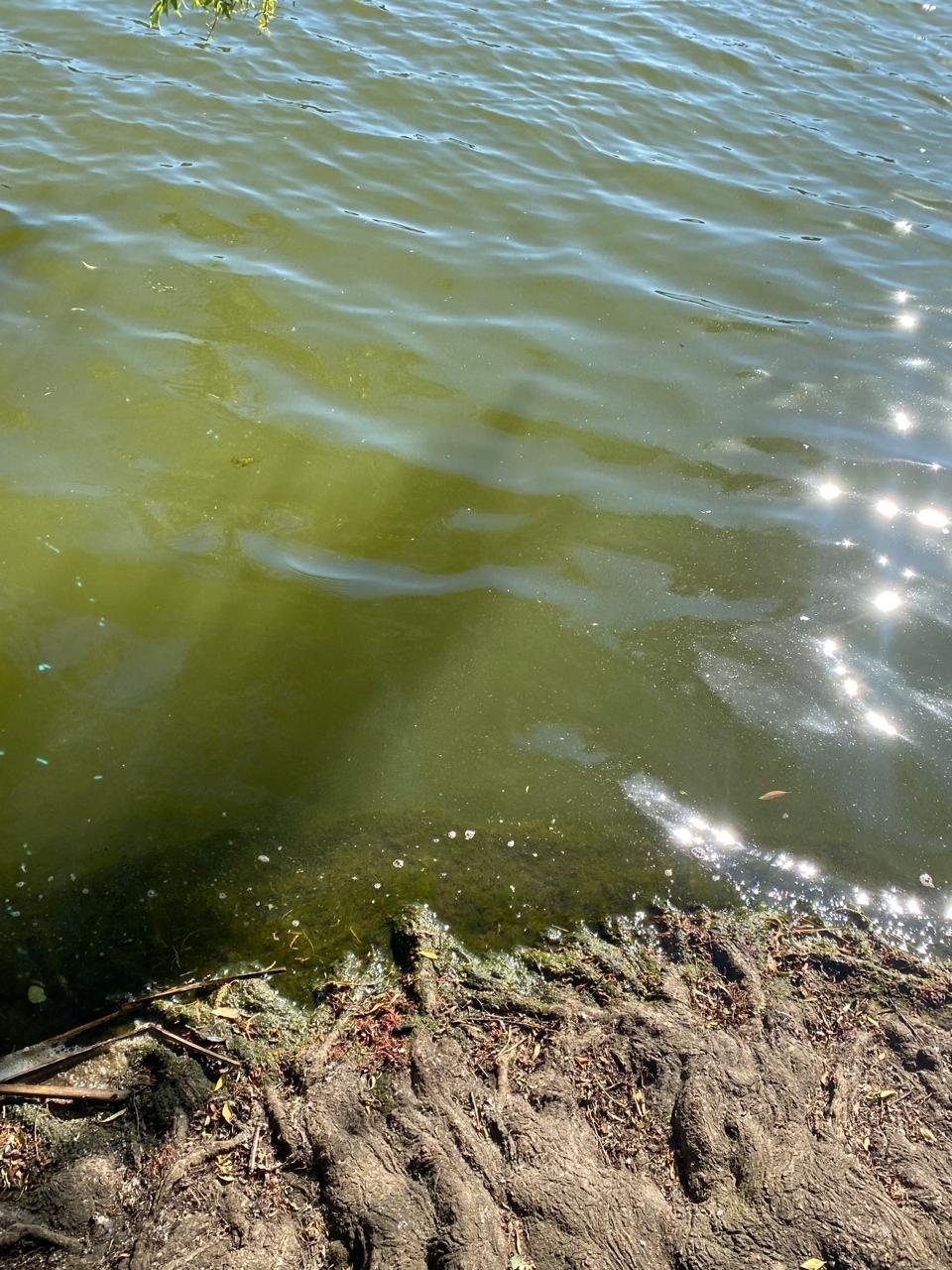
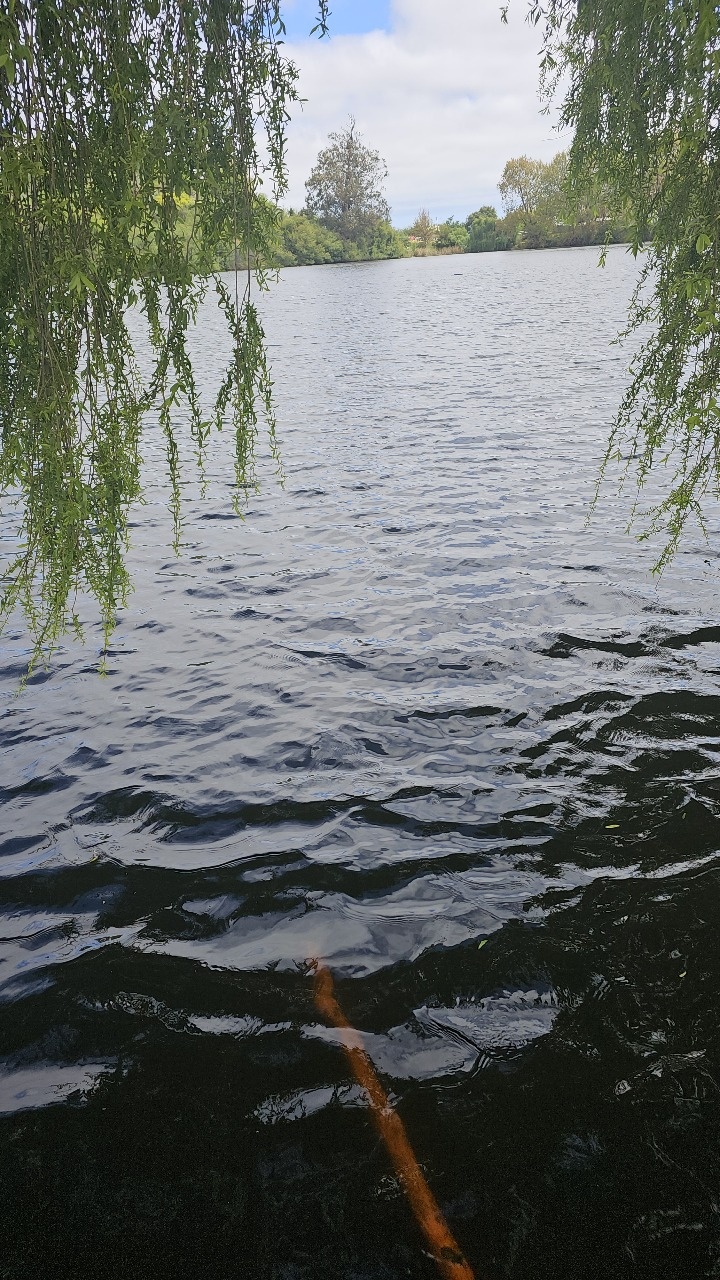
>90%
reduction in Microcystis biomass with one Pulsar 4400 Lo Méndez Lake, Concepción, Chile
Aquatic vegetation has also remained compatible with ultrasonic control. In a northern Chile irrigation pond, improved water clarity following algae control was accompanied by the development of submerged Potamogeton plants, a transition associated with healthier aquatic conditions.
Safe, Simple, and Chemical-Free
The research and field experience support a consistent conclusion: targeted, low-power ultrasound combats harmful algae while protecting the surrounding aquatic organisms and ecosystems.
SonicPure ultrasound is safe for people, pets, fish, birds, wildlife, zooplankton, and aquatic plants.
Our Pulsar 4400 operates continuously, 24 hours a day, combating active algae and cyanobacteria blooms while suppressing future growth. SonicPure’s chemical-free approach reduces reliance on recurring chemical treatments and helps improve water conditions without introducing chemical residues.
For the people responsible for the water, ultrasound’s safety comes with practical benefits. There’s no chemical to buy, store, handle, or dose, no toxin spike, and no copper building up in the sediment, and recurring algae treatment costs are reduced or eliminated. 90% of customers install a Pulsar in under 30 minutes, maintenance takes just 5 to 10 minutes per unit every 2 to 4 weeks, and each Pulsar uses only 30 W. One Pulsar 4400 covers up to 124 acres for cyanobacteria, and SonicPure ultrasound is proven at 1,000+ installations worldwide.
SonicPure ultrasound combats harmful algae without putting your family, your dog, the fish, or the wildlife at risk.
Read the Full Technical Paper
The full paper, Safety of Ultrasound for Fauna, Flora, and Human Health, covers each study in detail, with complete results and references.
Start controlling your algae and biofilm today. Call +1 (310) 955-4005 or email sales@sonicpure.com to get started, or request a quote.
Sources
Almanza, V. (2026). Safety of Ultrasound for Fauna, Flora, and Human Health. SonicPure technical paper.
Getchell, R. G., George, E., Rice, A. N., Malatos, J. M., Chambers, B. M., Griefen, A., Nieder, C., & Rudstam, L. G. (2022). Effects of ultrasonic algal control devices on fish. Lake and Reservoir Management, 38(3), 240–255.
Techer, D., Milla, S., & Banas, D. (2017). Sublethal effect assessment of a low-power and dual-frequency anti-cyanobacterial ultrasound device on the common carp (Cyprinus carpio): a field study. Environmental Science and Pollution Research, 24, 5669–5678.
Laughinghouse, H. D., Moretto, J., Berthold, D., Lefler, F., Hu, J., & Barbosa, M. (2023). The Effect of Ultrasound Treatment on Numerical Density and Physiological State of Trophic Levels in Lake Okeechobee, Florida. University of Florida.
Klemenčič, A. K., & Krivograd Klemenčič, A. (2021). Effects of low-power ultrasound on Daphnia magna and physicochemical parameters under laboratory conditions. Acta Biologica Slovenica, 64(2), 5–18.
U.S. Environmental Protection Agency (2021). Control measures for cyanobacterial HABs in surface water.
Occupational Safety and Health Administration. Technical Manual, Section III, Chapter 5: Ultrasound.
World Health Organization; Chorus, I., & Welker, M. (Eds.) (2021). Toxic Cyanobacteria in Water (2nd ed.).
About the Author

Dr. Viviana Almanza
Dr. Viviana Almanza is a marine biologist with a Ph.D. in Environmental Sciences and more than 20 years of experience studying lakes, rivers, reservoirs, and other inland aquatic ecosystems. She works closely with SonicPure’s distribution partners throughout Latin America, providing scientific and technical guidance on algae and cyanobacteria control, water-quality assessment, and the application of ultrasonic treatment systems. Her expertise includes cyanobacteria, phytoplankton ecology, limnology, eutrophication, aquatic management, and water quality. She has authored and co-authored scientific publications in these fields.