


University of Florida Algae Control Study
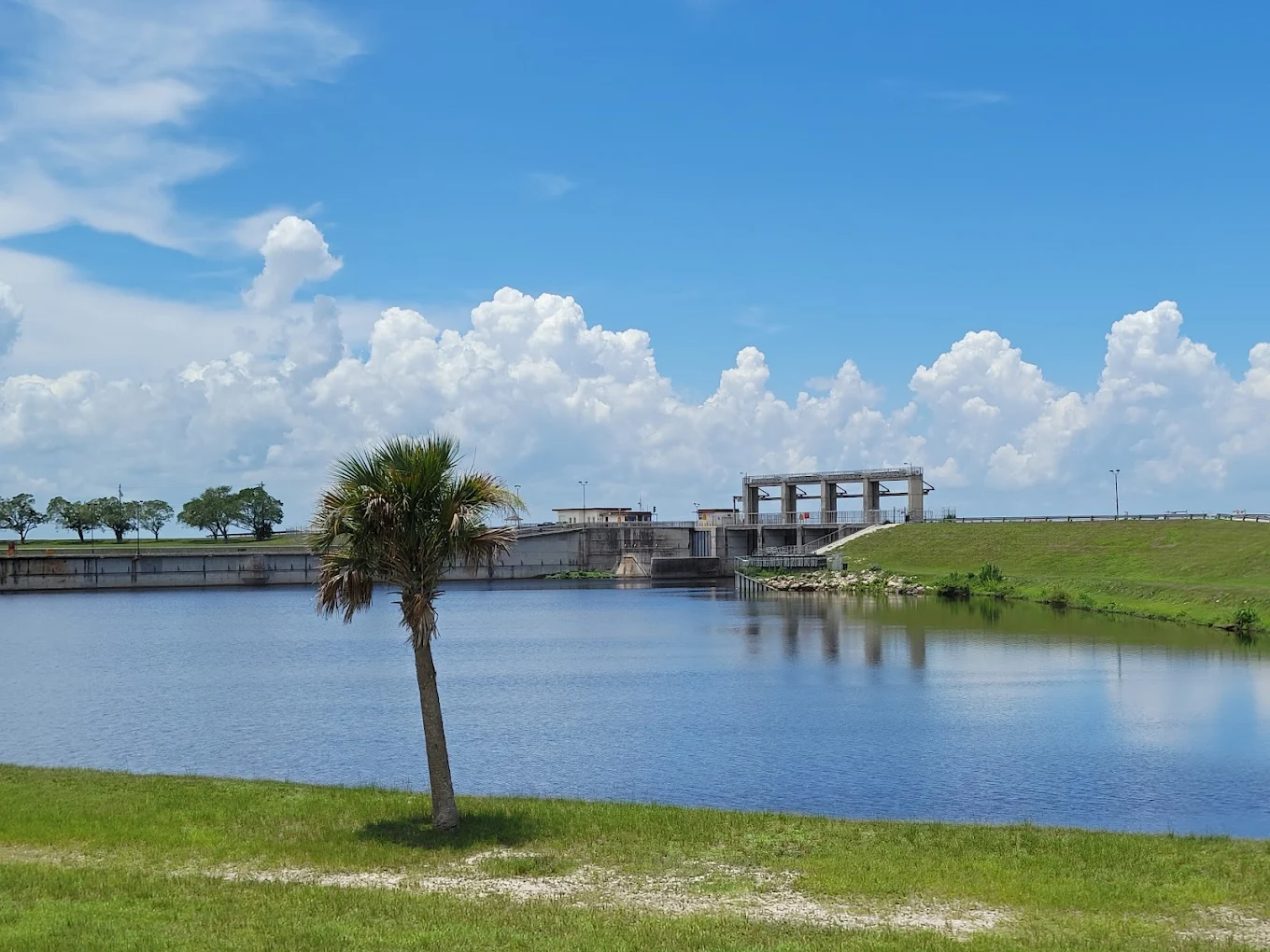
Location: Port Mayaca Lock, Florida
Study Area: 24.5 acres
Commenced: 2022
University of Florida Algae Control Study
Location: Port Mayaca Lock, Florida
Study Area: 24.5 acres
Commenced: 2022
Overview
In collaboration with the University of Florida’s Fort Lauderdale Research and Education Center, a double-blind study was conducted at Port Mayaca, near Lake Okeechobee, to evaluate the effectiveness of the Pulsar 4400™ ultrasonic system on harmful blue-green algae (cyanobacteria). Overseen by Dr. H. Dail Laughinghouse IV, Ph.D., a leading phycologist and HABs specialist, the research compared two side-by-side mesocosms—one equipped with the Pulsar 4000™ and one placebo. The study confirmed that ultrasound significantly reduced harmful algae concentrations without harming surrounding aquaculture or other trophic levels
The Challenge
Lake Okeechobee and its surrounding water bodies have faced recurring harmful algal blooms (HABs), threatening aquatic life, agriculture, and drinking water sources. Traditional copper- and peroxide-based treatments offer only temporary relief and can harm beneficial organisms. The University of Florida research team sought a non-chemical, sustainable solution that could target cyanobacteria effectively without collateral ecological damage. The project aimed to validate ultrasonic algae control under scientific conditions—measuring impacts on blue-green algae density, toxin levels, and surrounding plankton health over a controlled one-month study period
Results & Solution
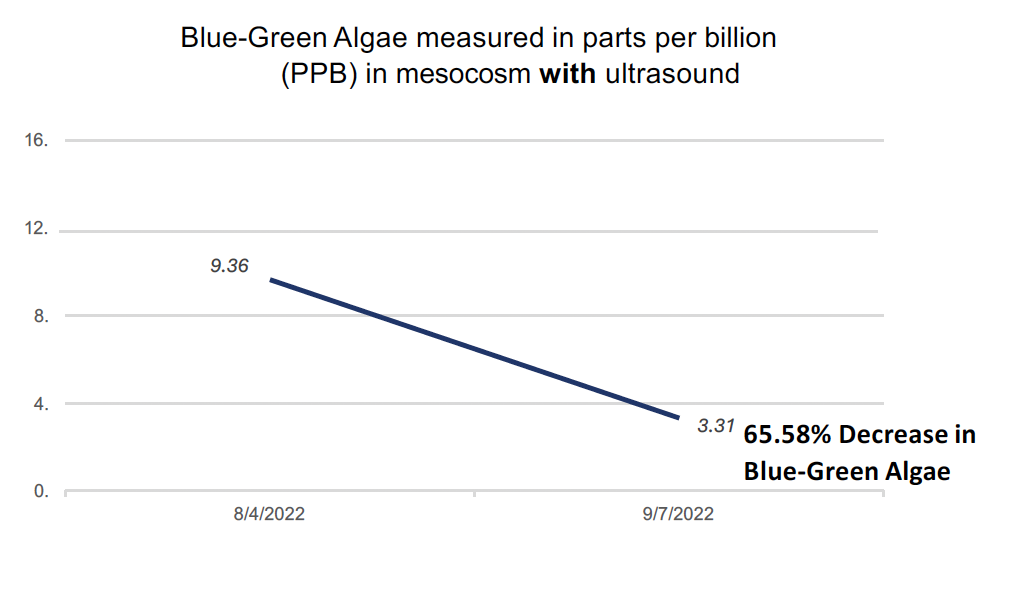
The Pulsar 4400™ achieved a 65.6% reduction in blue-green algae within the treatment mesocosm, compared to a 34.3% increase in the placebo tank over the same period (August 3 – September 6, 2022). Importantly, no phytoplankton or zooplankton were negatively affected. Algal concentrations dropped from 9.6 parts per billion (PPB) to 3.3 PPB, while the untreated control rose from 10.9 to 13.6 PPB.
These results demonstrate the Pulsar 4400™’s ability to selectively disrupt cyanobacteria without disturbing the balance of beneficial aquatic organisms. The study confirmed that ultrasonic treatment offers a precise, environmentally responsible alternative to chemical mitigation and can be scaled for use in lakes, reservoirs, and treatment lagoons statewide.
Summary
The University of Florida / Port Mayoca Study validated SonicPure®’s ultrasonic technology as a proven non-chemical solution for harmful blue-green algae control. The Pulsar 4000™ delivered a scientifically measured 65% reduction in HABs, while maintaining a healthy aquatic ecosystem—paving the way for large-scale deployment in Florida’s most critical water systems.
This landmark research establishes a foundation for integrating ultrasound into long-term lake restoration and drinking water protection programs, positioning SonicPure as the leader in sustainable algae control backed by independent, peer-reviewed scientific results.

The Challenge
Results & Solution
The Pulsar 4400™ achieved a 65.6% reduction in blue-green algae within the treatment mesocosm, compared to a 34.3% increase in the placebo tank over the same period (August 3 – September 6, 2022). Importantly, no phytoplankton or zooplankton were negatively affected. Algal concentrations dropped from 9.6 parts per billion (PPB) to 3.3 PPB, while the untreated control rose from 10.9 to 13.6 PPB.
These results demonstrate the Pulsar 4400™’s ability to selectively disrupt cyanobacteria without disturbing the balance of beneficial aquatic organisms. The study confirmed that ultrasonic treatment offers a precise, environmentally responsible alternative to chemical mitigation and can be scaled for use in lakes, reservoirs, and treatment lagoons statewide.
Summary
The University of Florida / Port Mayoca Study validated SonicPure®’s ultrasonic technology as a proven non-chemical solution for harmful blue-green algae control. The Pulsar 4000™ delivered a scientifically measured 65% reduction in HABs, while maintaining a healthy aquatic ecosystem—paving the way for large-scale deployment in Florida’s most critical water systems.
This landmark research establishes a foundation for integrating ultrasound into long-term lake restoration and drinking water protection programs, positioning SonicPure as the leader in sustainable algae control backed by independent, peer-reviewed scientific results.

.svg)