


Algae Bloom Season Started Early in 2026. It May Also Run Long.

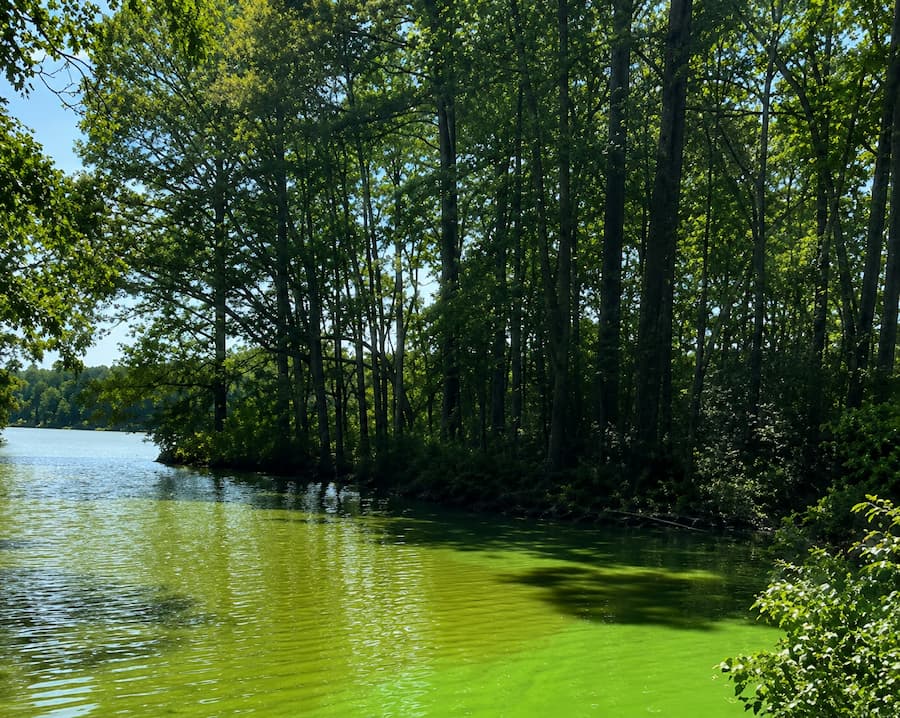
Spring harmful algal blooms (HABs) have already put communities on alert. For many lakes, reservoirs, ponds, and managed water systems, the highest-risk months may still be ahead.
The bloom arrived before the monitoring season
Cayuga Lake’s 2026 algal bloom season did not wait for summer. It did not even wait for regular monitoring to begin.
On April 23, a volunteer spotted a bright green accumulation near Harris Park in the Village of Cayuga, New York. Microscopic analysis confirmed abundant Microcystis, a bloom-forming cyanobacterium. It was the earliest confirmed HAB since the program began monitoring Cayuga Lake in 2018, appearing more than a month before regular monitoring was scheduled to begin.
Cayuga Lake delivered a dramatic early warning. Kansas showed that the problem was much broader than one unusual event.
Kansas opened its official harmful algal bloom monitoring season on April 1. Just two days later, Lake Afton was under a blue-green algae warning, with officials advising people and pets to avoid contact with the water. By May 22, six Kansas water bodies were under active advisories. That number doubled to 12 by June 18. By July 10, 15 water bodies were under warnings or watches, and Lake Afton remained on the list more than three months after its early-April warning.
Kansas was not alone. Nevada showed a similar statewide escalation. Lahontan Reservoir was under a bloom watch by May 11, and by late June the state was tracking nine active HAB events across multiple recreational waters, including warning and danger-level conditions at portions of Lake Mohave.
From New York to Kansas and Nevada, bloom season was already underway before summer had fully arrived. For water bodies that still looked clear, the risk had not passed.
No algae bloom yet? The season is far from over
Clear water today is no guarantee for August, September, or October.
Algae blooms can gain momentum quickly once the water turns warm and still. Low flows and drought reduce flushing, while calm conditions keep buoyant cyanobacteria near the sunlit surface. The longer warm water and nutrients remain in place, the more opportunity a bloom has to build.
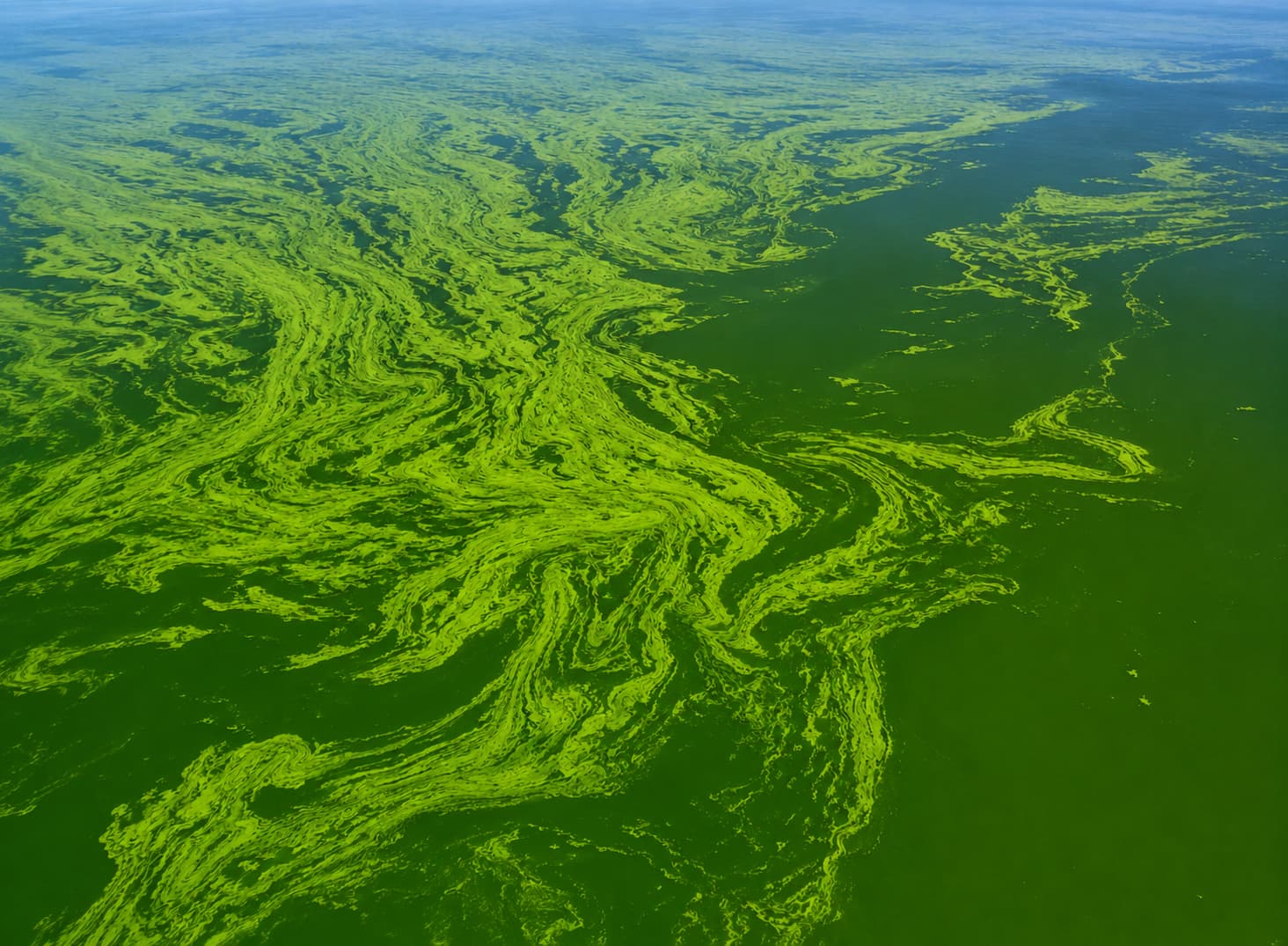
The fuel can keep coming. Storms wash phosphorus and nitrogen into the water, dry periods concentrate what is already there, and low oxygen can release phosphorus from bottom sediments. That combination can trigger new growth, intensify an active bloom, or keep bloom pressure in place long after summer begins. EPA identifies warmer temperatures, nutrient loading, altered water flow, and stronger stratification among the conditions that drive bloom formation and persistence.
Algae bloom season is stretching into fall
Earlier starts are only part of the story. Harmful blooms are also increasing in duration in many freshwater systems, extending the period of risk deeper into fall.
Recent seasons show what that can look like. Cayuga Lake’s monitoring program documented its latest blooms on record in November 2025. In Kansas, nine lakes remained under warnings or watches after the recreation season ended on October 31, and two more lakes were added through off-season advisories the following week.
Algae and cyanobacteria can stay active long after summer. A late-season warm spell, nutrient-rich runoff, or phosphorus released from bottom sediments can give algae fresh momentum just when the season appears to be ending. EPA reports that warmer water is expected to increase both the magnitude and duration of cyanobacterial blooms. The idea that algae problems arrive in midsummer and disappear by Labor Day is becoming increasingly outdated.
A longer season raises the stakes
A harmful algal bloom is more than an ugly patch of green water.
For lakes and reservoirs, it can mean closed beaches, recreation restrictions, fish kills, foul odors, lost tourism, and repeated public warnings. Pets face a particular danger because they may drink contaminated water, swim through concentrated surface scum, or lick algae from their fur. Dense blooms can also block sunlight and consume oxygen as they decay, leaving fish and other aquatic life unable to survive.
For drinking-water plants, the problem follows the water into the treatment process. Cyanobacteria can produce toxins, create earthy or musty taste-and-odor problems, and challenge conventional treatment during severe blooms. Operators may need more frequent testing, process adjustments, activated carbon, additional treatment chemicals, and closer monitoring to protect finished-water quality and maintain public confidence.
When algae bloom season stretches longer, so do the closures, costs, operational demands, and risks.
Control active blooms. Suppress what may be coming
For anyone already battling algae or cyanobacteria, waiting is not a strategy. When favorable conditions persist, chemical applications can become a recurring cycle of treatment, labor, expense, and renewed algae growth.
SonicPure offers a different approach.
SonicPure systems operate continuously, 24 hours a day, using targeted, non-cavitating ultrasonic frequencies to control susceptible active algae and cyanobacteria while suppressing new bloom development, without adding chemicals to the water.
Continuous ultrasonic treatment remains relevant whether an algae bloom is already visible or conditions are only beginning to turn favorable.
When a bloom is active, SonicPure can begin controlling susceptible algae and cyanobacteria already present in the water. If conditions remain clear, the same continuous treatment can suppress new bloom formation before late-summer or fall conditions trigger a larger outbreak.
SonicPure’s Pulsar 4400 ultrasound technology keeps working as temperatures rise, inflows fall, storms deliver nutrients, and circulation patterns shift. Water-system managers and lake owners do not have to wait for a scheduled chemical application or for a visible surface bloom before acting.
Ultrasound complements nutrient management, watershed improvements, monitoring, circulation, aeration, beneficial bacteria, and other site-specific water-quality strategies. SonicPure systems are easy to deploy, simple to operate, and low maintenance.
Bloom season started early in 2026, and for many water bodies, it may also run long. Whether algae and cyanobacteria are active now or conditions remain clear, there is still time to put continuous control in place before the highest-risk period arrives.
Talk with SonicPure now about a continuous, chemical-free algae control plan for your lake, reservoir, pond, or managed water system.

.svg)