


Ginger Cove HOA
Location: Valley, Nebraska
Lake Area: ~100 acres
Installed: 2016
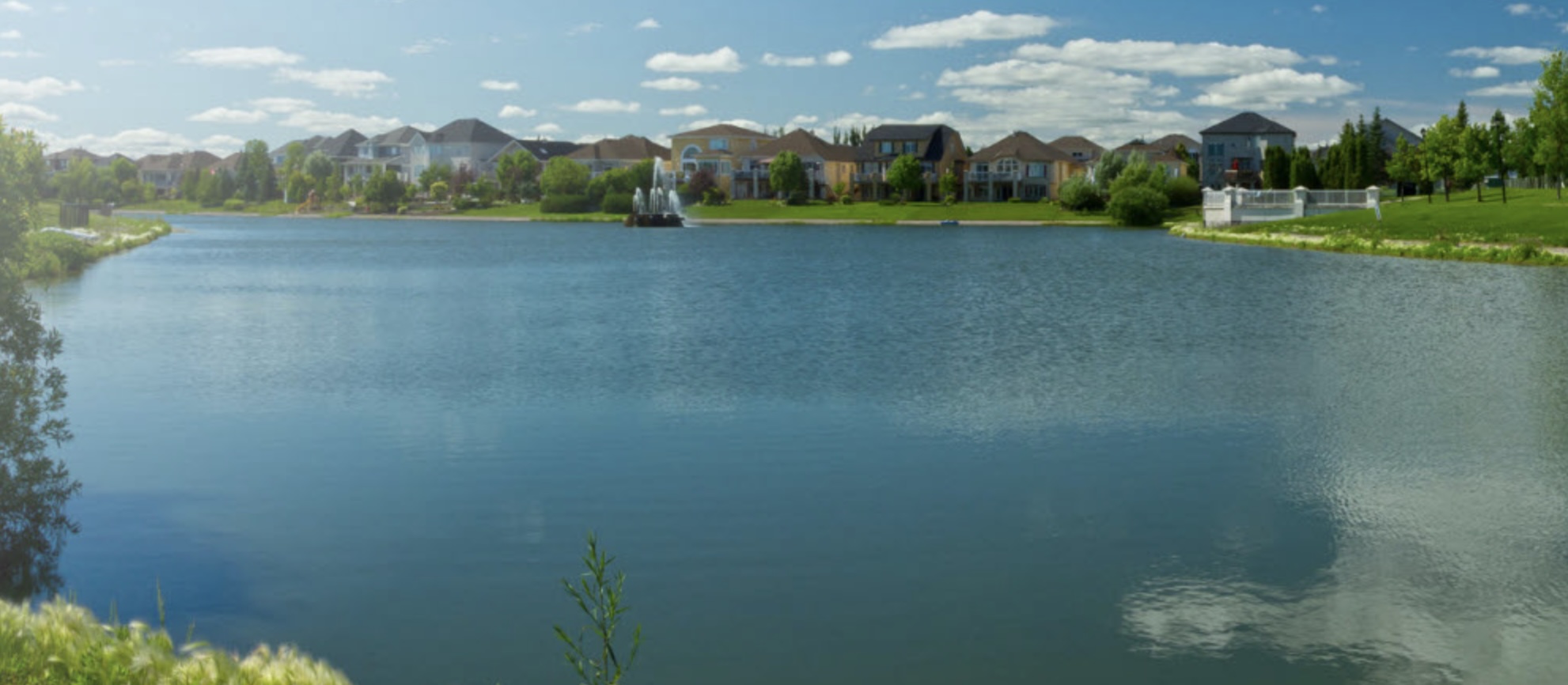
Ginger Cove HOA
Location: Valley, Nebraska
Lake Area: ~100 acres
Installed: 2016

Overview
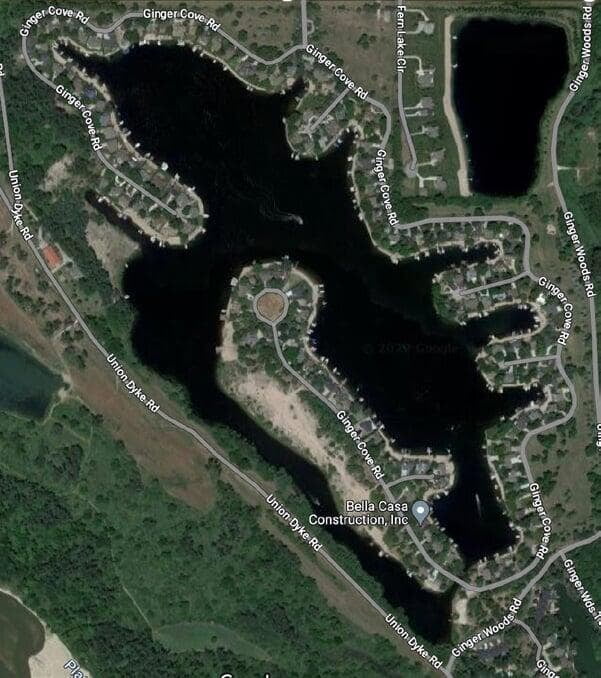
Located in Valley, Nebraska, Ginger Cove is a premier spring-fed, sand-bottom lake community established in 1966. Spanning nearly 100 acres of pristine water and 40 acres of landscaped greenspace, it’s also home to Nebraska’s longest authentic covered bridge. The community features 160 residential lots enjoyed by both full-time and seasonal residents.
The lake averages 17 feet in depth, with certain areas reaching 40 feet, making it ideal for recreation such as fishing, boating, and water sports. For generations, families have cherished the beauty, camaraderie, and tranquility that define life at Ginger Cove.
The Challenge
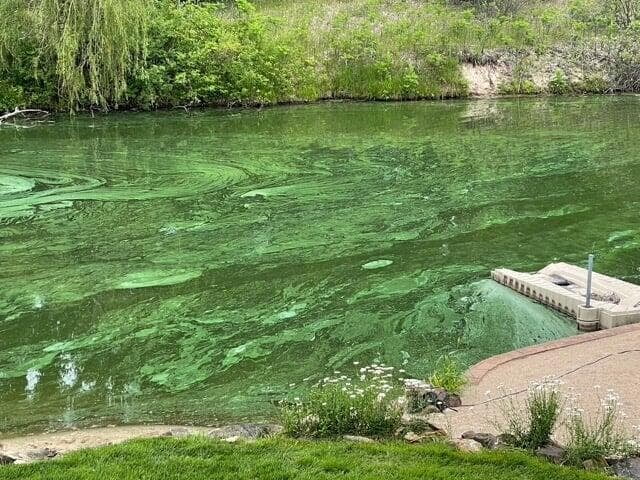
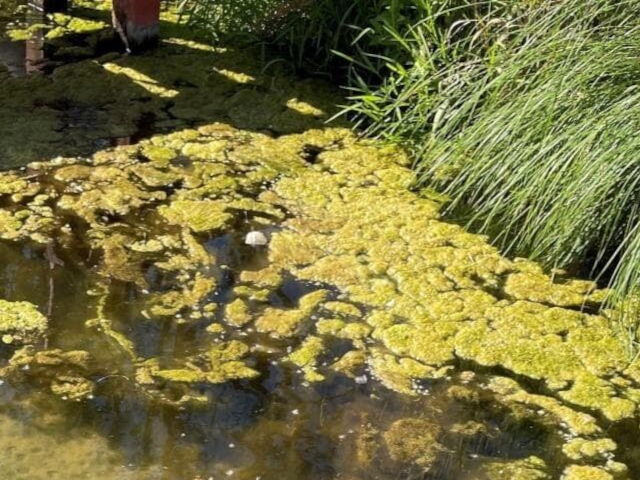
For more than forty years, the residents of Ginger Cove struggled to maintain consistent water quality. Despite repeated efforts, nuisance filamentous algae and harmful blue-green algae continued to thrive. In the early 2000s, the community installed an aeration system to boost oxygen levels and support aquatic life. While this helped improve overall lake health, it did little to reduce algae growth or improve water clarity, leaving the underlying problem unresolved.
In the years that followed, the HOA board worked with several water quality specialists to address worsening algae blooms and declining clarity. Experts recommended an alum treatment to bind phosphorus, one of the key nutrients fueling algae growth. However, the treatment proved expensive and limited in scope, as it did not address nitrogen—the other major driver of aquatic plant and algae proliferation.
In 2016, Carly Dana, a newly elected board member, led the launch of a revitalized water quality program focused on reducing chemical dependency and adopting environmentally sustainable management practices for the lake.

The Challenge
In the years that followed, the HOA board worked with several water quality specialists to address worsening algae blooms and declining clarity. Experts recommended an alum treatment to bind phosphorus, one of the key nutrients fueling algae growth. However, the treatment proved expensive and limited in scope, as it did not address nitrogen—the other major driver of aquatic plant and algae proliferation.
In 2016, Carly Dana, a newly elected board member, led the launch of a revitalized water quality program focused on reducing chemical dependency and adopting environmentally sustainable management practices for the lake.
According to Dana, “There was a realization that years of chemical-based treatments and other techniques had not proven to be effective. Therefore, we looked toward the latest science and technology to discover new and more effective solutions that were environmentally friendly so that fish and other wildlife were not harmed by their use.”
To combat high phosphorus and nitrogen levels in Ginger Cove’s lake, a bacterial enzyme program was introduced during the summer months to reduce muck and improve water clarity. Over six years, the program proved effective—phosphorus declined, nitrogen became undetectable, and filamentous algae blooms diminished.
Despite these gains, harmful blue-green algae blooms persisted. The lake still experienced unsightly, toxic outbreaks that disrupted recreation and occasionally tested positive for microcystin, a potent cyanotoxin dangerous to pets, wildlife, and humans. The only available control method—chelated copper treatments—was costly and counterproductive, damaging the enzyme program and the lake’s ecosystem.
Blue-green algae, a form of cyanobacteria, thrive in warm months, forcing HOAs like Ginger Cove to seek alternatives. Chemical trial-and-error approaches often caused more harm than good, with research now confirming the long-term ecological risks of such treatments.
Left unchecked, cyanobacterial blooms can threaten public health, damage infrastructure, lower property values, and reduce recreation revenue. The EPA estimates harmful algal blooms cost the U.S. economy $4.6 billion annually, underscoring the need for effective, environmentally safe solutions.
The SonicPure® Solution
The Pulsar 4400 emits over 4000 unique ultrasonic frequencies into the water column, hitting the Critical Structural Resonance of the algal cell which breaks the cell bond, interferes with the reproductive or flotation mechanism and expedites the death of the algae cell. The outer membrane of the cell is retained, preventing the release of toxins.

The Solution
In search of a sustainable, chemical-free solution, ultrasonic technology was tested at Ginger Cove in the fall of 2020. While ultrasound had long been recognized as an effective method for algae control, newer systems expanded its capability—emitting over 4,000 frequencies to disrupt algae cell walls, causing them to break down and die naturally.
The first pilot began in a 1-acre cove experiencing a severe blue-green algae bloom. Within two weeks, the bloom was eliminated, proving ultrasound’s effectiveness. Encouraged by the results, the Ginger Cove HOA Board approved the installation of six units to cover the lake’s 90 surface acres. The systems quickly became integral to the lake’s health, clearing small blooms within 12–48 hours. By 2022, water clarity improved dramatically, with readings between 4.5 and 8 feet deep in several areas.
In July 2022, a temporary power disruption to one unit caused a localized bloom—confirming the system’s vital role. Once power was restored, the lake remained clear for the rest of the season.
Modern ultrasonic systems effectively target up to 95% of the world’s 70,000 algae species and two million subspecies, including cyanobacteria. Safe for fish, plants, and aquatic life, these low-maintenance, energy-efficient units offer a long-term, cost-effective, and environmentally sound solution for harmful algal bloom (HAB) control.
The Results
Ginger Cove residents have been very impressed with the lake’s water quality and clarity, with many of the longest residing homeowners stating that the lake looks the best it ever has in over forty years.
“I am so appreciative of our Water Quality Committee for implementing Ultrasonic Algae Control , which have helped make our lake so much better. I believe the technology is farmore productive than the chemical spraying of algae blooms. The new system also helps calm any of our fears of getting in the water and enjoying the lake versus using a company to spray along our shorelines with chemicals.”
- Linda, Ginger Cove resident
“I have lived at Ginger Cove for more than forty years, and the water quality has never been better than it is now. For many decades the lake would experience weeks, or month-long algae blooms during the summer, which made boating and swimming less desirable. With the ultrasonic algae control system and the continuation of bacterial enzyme treatments, we are finally taking more proactive steps to solve our water quality problems without using chemicals. The ultrasonic technology allows us to stop harming the environment and helps to keep our families and pets safer while enjoying the lake we love."
-Charlotte, Ginger Cove resident
Ginger Cove has been successful in improving the water quality of the lake with the help of ultrasound. The use of high-frequency sound waves to disrupt the growth of algae and other harmful organisms, without harming fish and other wildlife has been a benefit to the entire community. These improvements have led to much higher and more sustainable water quality levels, making the lake a safer and more enjoyable place for people to swim, fish, and relax.

.svg)