


Why Cyanobacterial Blooms Are Increasing in U.S. Lakes and Reservoirs

Why Cyanobacterial Blooms Are Increasing in U.S. Lakes and Reservoirs
I have been watching cyanobacterial blooms become more common in lakes and reservoirs across the United States, and they are no longer confined to a short window in the summer. In many systems, blooms are appearing earlier in the year, lasting well into the fall, and reaching biomass levels that were rarely seen in the past. For water utilities, this shift shows up as higher operating costs, more frequent public advisories, and increased regulatory pressure. Understanding why these blooms are increasing is essential if we want to manage reservoirs proactively rather than react after problems reach the treatment plant.
Rising Temperatures and Climate Warming
One of the most consistent drivers behind this trend is rising water temperature. Cyanobacteria thrive in warm conditions, and many genera that pose the greatest operational concern grow fastest when water temperatures exceed about 77 degrees Fahrenheit. As lakes warm, bloom season begins earlier, often in late spring instead of midsummer. Stratification becomes more stable, which gives buoyant cyanobacteria an advantage. Nighttime cooling is weaker, vertical mixing decreases, and longer periods of stagnation allow biomass to accumulate. Monitoring data from across the country shows that surface water temperatures in many drinking water reservoirs have increased by one to three degrees Celsius over the last several decades, and that change alone increases both bloom frequency and intensity.
Increased Nutrient Loading From Watersheds
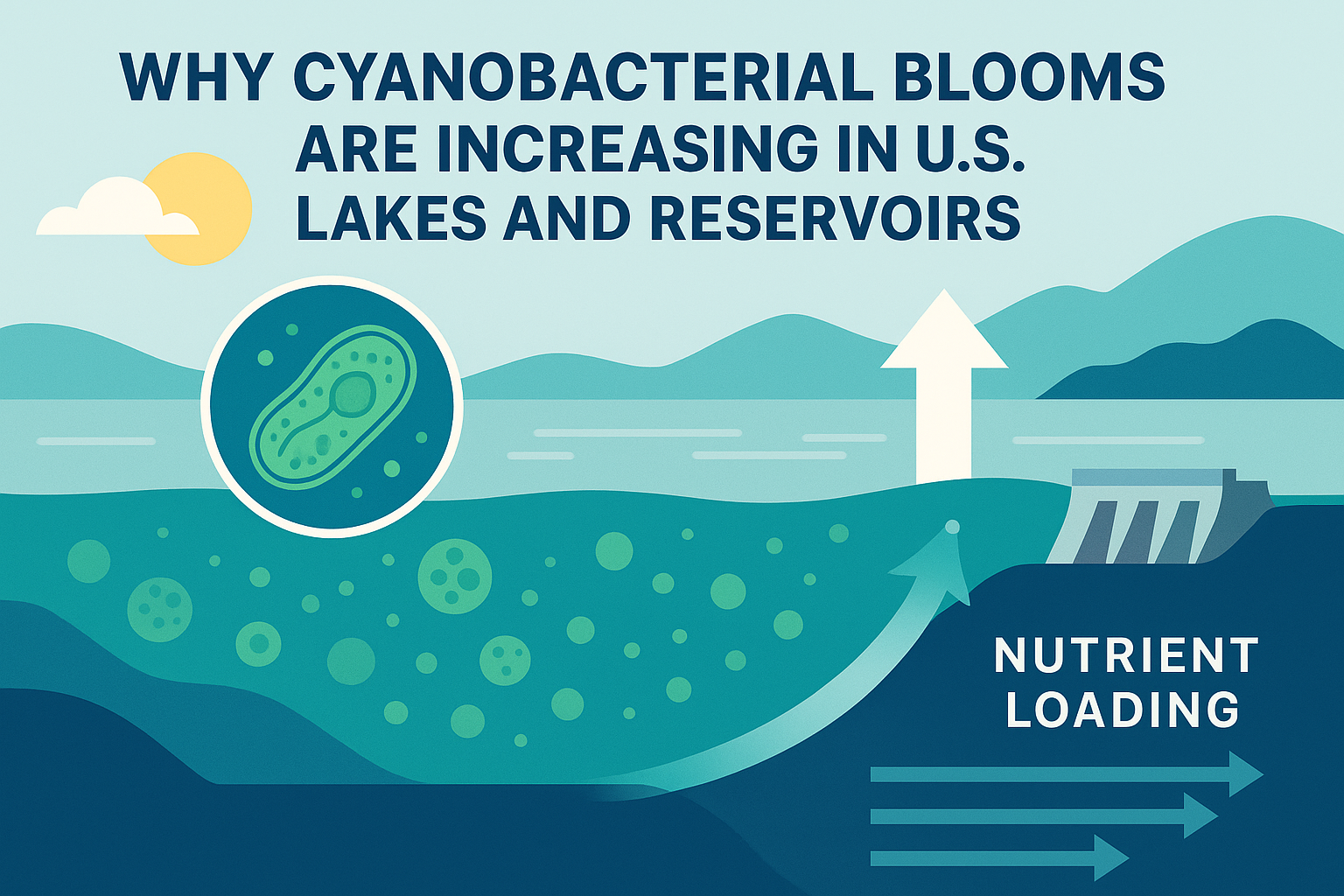
Nutrient loading remains a central factor. Phosphorus and nitrogen are the primary nutrients for cyanobacterial growth, and even modest increases can lead to large blooms. Nutrients enter reservoirs through agricultural runoff, fertilizer applications, manure, and tile drainage systems, which quickly move them into waterways. In urban areas, fertilizers from lawns and golf courses, pet waste, and material washed off roads all contribute. Stormwater systems that move water rapidly without retention deliver nutrients directly to lakes and reservoirs. Internal loading also plays a role. When bottom waters become anoxic, phosphorus stored in sediments can be released into the water column, supporting blooms later in the season. On top of that, modern storms often deliver short, intense pulses of runoff that inject high nutrient loads all at once.
More Stable Stratification in Reservoirs
As temperatures rise, stratification becomes more persistent. The separation between warm surface water and cooler deep water lasts longer and breaks down less frequently. This favors cyanobacteria because they can regulate their buoyancy and stay in the photic zone, while competing algae are more likely to sink out of the light. At the same time, deep waters tend to lose oxygen, which increases internal phosphorus release. With fewer mixing events to disrupt them, blooms can continue to build. Many utilities now observe shorter spring turnover periods and fall turnover that occurs weeks later than it once did, effectively extending the bloom window.
Longer Growing Seasons
The growing season itself has expanded. Historically, the bloom season ran from June to September. Now blooms often appear in late April or early May, with significant biomass persisting into October or November. In some southern states, winter blooms are occasionally observed. A longer growing season increases the number of bloom cycles in a single year and raises the likelihood of toxin events.
More Frequent Droughts and Slow-Flow Conditions
Drought conditions also favor cyanobacteria. Reduced inflow lowers flushing rates and increases water residence time, allowing nutrients to accumulate rather than be exported downstream. Surface waters warm faster, circulation weakens, and stagnant conditions develop. These factors create ideal environments for blooms, particularly in shallow municipal reservoirs, reclaimed lakes, and irrigation storage systems.
Intense Rainfall and Runoff Events
Heavy storms contribute in a different way. Large rainfall events deliver nutrient-rich runoff rapidly, resuspend phosphorus from sediments, and introduce organic matter that cyanobacteria can use as a substrate. These storms often cause short-term turbidity spikes followed by rapid clearing. That pattern provides both nutrients and favorable light conditions, which can accelerate bloom development once the system stabilizes.
Aging Reservoir Infrastructure
Many reservoirs were designed decades ago for very different climate and nutrient conditions. Over time, sediment accumulates, circulation capacity declines, and aeration or destratification systems no longer perform as originally intended. Watershed buffers may be limited, and stormwater infrastructure may be outdated. Systems designed for mid-20th-century conditions struggle to cope with today’s temperature dynamics and nutrient loads.
Expansion Into New Regions
Cyanobacteria are also appearing in regions that were once considered too cold. Blooms are now documented in northern Michigan, the Minnesota boundary waters, Canadian prairie reservoirs, New England lakes, and high-altitude western reservoirs. This expansion aligns with warming waters, nutrient enrichment, and reduced ice cover duration.
Increased Prevalence of Toxin-Producing Strains
Another concern is the apparent increase in toxin-producing strains. Many cyanobacteria species include both toxic and non-toxic forms. Environmental stressors such as heat, nutrient spikes, chemical disturbances, and competition may favor toxin-producing strains. Utilities in several states have reported higher microcystin levels, more frequent anatoxin-a detections, and occasional cylindrospermopsin events in areas where it was previously uncommon. This increases both treatment complexity and public health risk.
Reduced Dilution From Smaller Snowpack and Earlier Melt
In the western United States, shrinking snowpack and earlier snowmelt change reservoir dynamics. Peak flows occur earlier in the year, reservoirs warm sooner, and dilution during the summer is reduced. These conditions increase susceptibility to harmful blooms.
What This Means for Water Utilities
Taken together, these factors point toward more frequent blooms, higher peak biomass, longer bloom seasons, and greater variability in toxin production. Taste and odor issues are likely to persist, and treatment costs will continue to rise. Without improvements in watershed management, in-reservoir controls, and monitoring systems, these trends are unlikely to reverse on their own.

.svg)