


What Is Cyanobacteria?

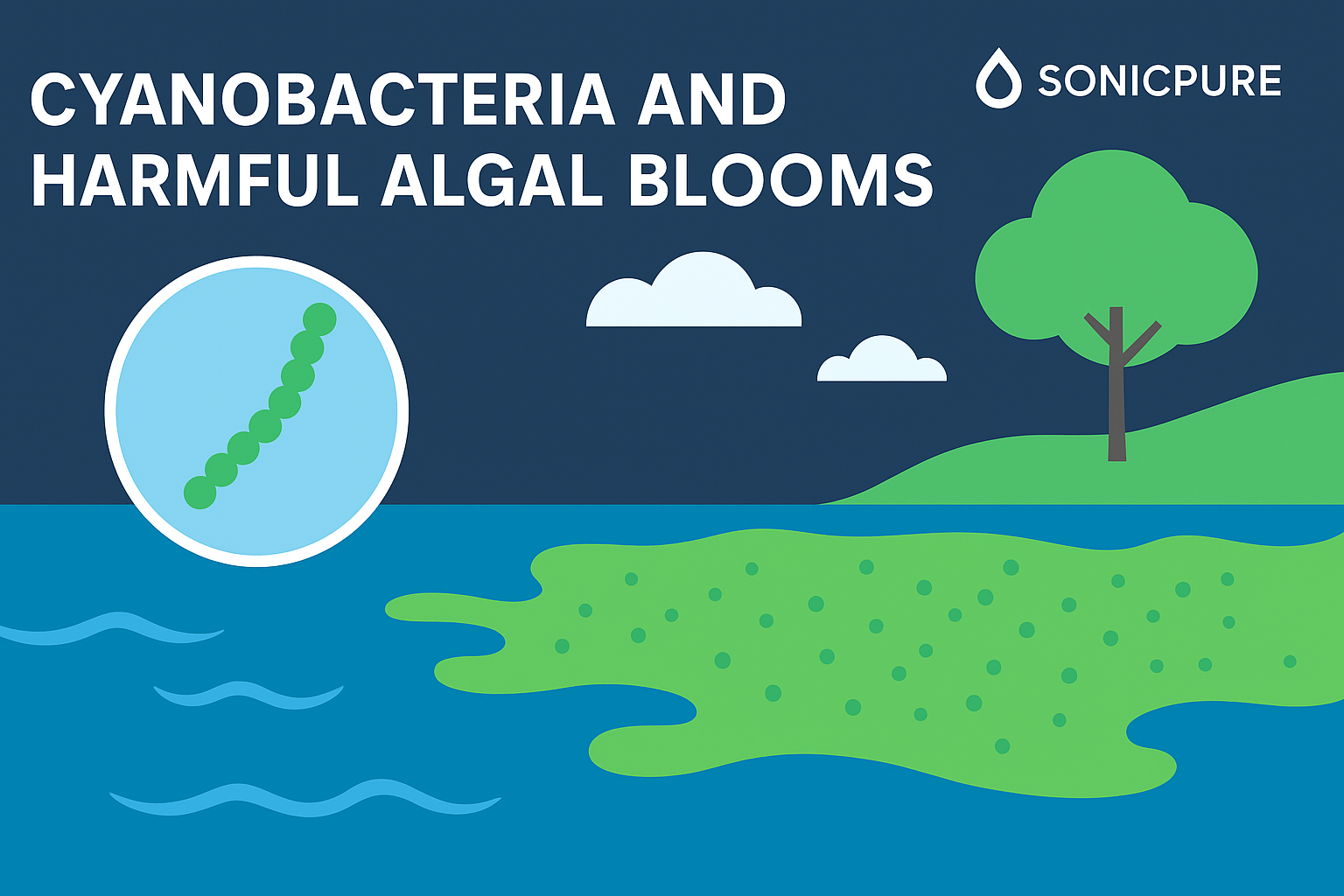
What Is Cyanobacteria? A Practical Guide for Reservoir Managers
Cyanobacterial blooms have become one of the most persistent and costly issues we see when working with drinking water utilities across the United States. As temperatures rise, drought cycles lengthen, and nutrients continue to enter source waters, more reservoirs are experiencing rapid cyanobacterial growth and elevated toxin levels. From the perspective of a city or utility team, understanding what cyanobacteria are, why they bloom, and how they affect treatment operations is usually the first practical step toward managing them more effectively.
What Exactly Are Cyanobacteria?
When we talk about cyanobacteria, we refer to photosynthetic bacteria found in almost every freshwater system. They are often called blue-green algae, but they are not algae. They are gram-negative bacteria that happen to perform photosynthesis.
In reservoirs, they tend to do best in warm, stagnant water with elevated nutrients, particularly phosphorus and nitrogen. We often see them concentrate in stratified systems with limited circulation, especially in shallow coves or areas protected from wind. In U.S. drinking water reservoirs, the genera we encounter most often include Microcystis, Dolichospermum, Planktothrix, Aphanizomenon, and Cylindrospermopsis. These organisms are responsible for most harmful algal bloom advisories, lake closures, and taste-and-odor complaints.
Why They Multiply So Quickly
One reason cyanobacteria are so difficult to manage is how quickly they can multiply under the right conditions. They are highly adaptive and tend to outcompete other algae.
Many species can control their buoyancy using gas vesicles, which allows them to move up and down in the water column depending on light conditions. This behavior is what leads to surface scums forming during calm, sunny periods. Some genera can fix nitrogen from the atmosphere, which gives them an advantage when nitrogen is limited in the water. They are also efficient at photosynthesis in low-light conditions, allowing them to persist when other algae struggle.
Once water temperatures rise above roughly 72 degrees Fahrenheit and nutrients are available, populations can increase very quickly.
Why Cyanobacteria Matter to Water Utilities
For water utilities, cyanobacteria pose operational and regulatory challenges. Many cyanobacteria produce toxins that affect the liver, nervous system, or skin. Microcystin is the most common toxin encountered in U.S. systems, but anatoxin-a and cylindrospermopsin also pose risks, particularly because they behave differently during treatment. Even blooms that are not toxic at first can begin producing toxins when cells are stressed.
Beyond toxins, cyanobacteria are also responsible for taste and odor compounds such as geosmin and MIB. These compounds often drive customer complaints and increase reliance on activated carbon during treatment.
From an operational standpoint, blooms complicate nearly every part of the treatment process. Operators frequently see faster filter clogging, higher coagulant demand, increased sludge production, rising turbidity, and elevated dissolved organic carbon. Disinfectant demand can increase as well. Chemical treatments applied in the source water or at the plant can rupture cyanobacterial cells, releasing intracellular toxins into the water column and making control more difficult rather than easier.
Regulatory and Public Communication Burdens
There is also a regulatory and communication component that utilities must manage during bloom events. Harmful algal blooms often require increased sampling, additional reporting, and coordination with state health departments. Public advisories may be necessary, which adds to the utility's administrative workload and introduces reputational risk.
What Causes Cyanobacteria Blooms?
Cyanobacterial blooms rarely occur due to a single factor. Instead, they develop when several conditions align.
Nutrient loading plays a central role, with phosphorus often limiting in freshwater systems. Inputs commonly come from agricultural runoff, lawn and irrigation fertilizers, stormwater surges, internal loading from anoxic sediments, and failing septic systems. Even relatively small increases in nutrient availability can trigger large blooms.
Warm temperatures accelerate growth by increasing cell division rates and extending bloom seasons. Warmer nighttime temperatures can reduce thermal mixing, which strengthens stratification. Stable, layered water allows buoyant cyanobacteria to dominate the upper portion of the water column. Calm weather further encourages surface accumulation, while long hydraulic retention times allow biomass to build up in slow-moving reservoirs.
How Reservoir Managers Can Identify Early-Stage HABs
Early detection is one of the most effective ways to limit treatment disruptions and control costs. Visually, early blooms may appear as green streaks, surface scums, foam-like accumulations, or a pea-soup appearance.
Many utilities rely on instrumentation such as phycocyanin fluorometers, sonde profiles measuring temperature, dissolved oxygen, and chlorophyll-a, and in some cases, online toxin monitors. A practical monitoring program typically combines these tools with routine sampling for cell counts, toxin concentrations, nutrients, Secchi depth, and vertical temperature profiles. Consistent monitoring helps reduce the risk of sudden blooms that unexpectedly release toxins.
The Economics of Cyanobacteria for Utilities
Cyanobacteria increase operational costs in ways that often compound over time. Chemical use increases, labor demands rise, filters require more frequent backwashing, and equipment wears more quickly. During severe events, utilities may also need to manage emergency response activities. Over the long term, prevention and early intervention are generally more cost-effective than reacting to fully developed blooms.
Long-Term Management Approaches
Long-term management typically involves a combination of watershed-level and in-reservoir strategies. Reducing phosphorus inputs through improved land-use practices, vegetative buffers, stormwater retrofits, and changes in agricultural practices is often part of the approach.
Within the reservoir, utilities may use mixing or aeration, ultrasound, biological controls, or targeted dredging. There is no single solution that works for every system, and each reservoir requires a management plan that reflects its depth, circulation patterns, nutrient loading, and climate.
Takeaway for Water Managers
Cyanobacteria are resilient, fast-growing organisms that thrive in warm, nutrient-rich, slow-moving water. For utilities, the challenge is not just removing blooms once they appear, but improving monitoring, reducing the conditions that allow them to form, and minimizing treatment disruptions caused by toxin release. Understanding how cyanobacteria behave is a necessary foundation for managing harmful algal blooms effectively.

.svg)