


Understanding Cyanotoxins: Microcystin, Anatoxin-a & Cylindrospermopsin

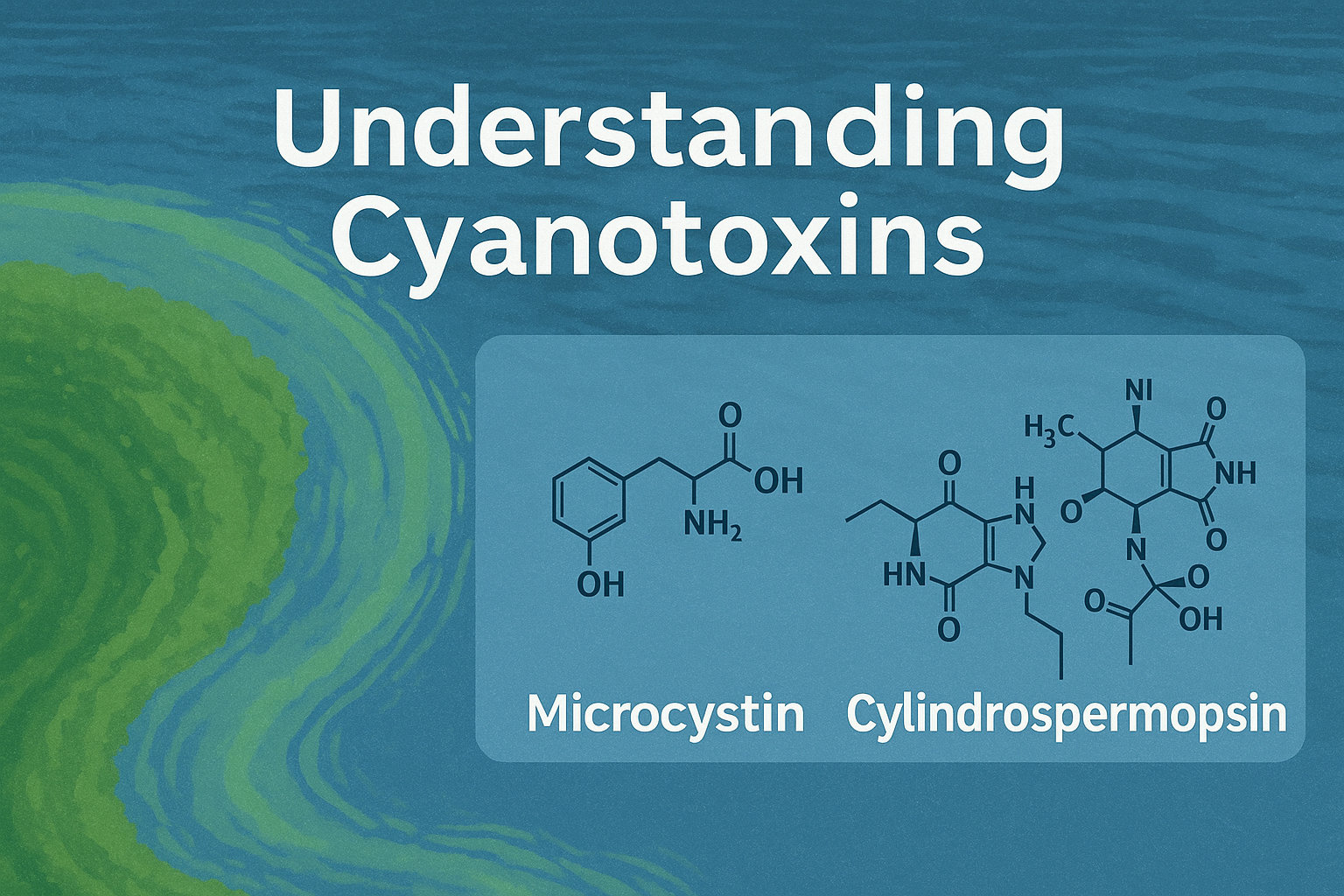
Understanding Cyanotoxins: Microcystin, Anatoxin-a & Cylindrospermopsin
I work with water utilities that are increasingly dealing with cyanotoxins as a real operational and public health concern. Harmful algal blooms are occurring more frequently and lasting longer, and when toxins are involved, they can appear quickly, persist in source water, and strain even well-designed treatment systems. Managing that risk starts with understanding what these toxins are, how they behave in freshwater systems, and why certain conditions tend to create the biggest problems for utilities.
What Cyanotoxins Are and Why They Matter
When I talk about cyanotoxins, I am referring to compounds produced by certain cyanobacterial species as secondary metabolites. Not every bloom is toxic, and not every cyanobacteria species produces toxins, but environmental stressors can increase the likelihood of toxin production or release. Heat, nutrient loading, competition, and chemical treatment all influence how these organisms respond.
One of the most important factors for utilities to understand is that toxins are often released when cyanobacteria cells rupture. That rupture can happen naturally as a bloom declines, or it can be accelerated by copper sulfate, peroxide treatments, rapid temperature shifts, or predation. Once released, some toxins remain in the water for days or weeks. Even when treatment options such as activated carbon or oxidation are available, their effectiveness depends heavily on the specific toxin involved. Because regulatory thresholds are extremely low, relatively small increases in concentration can trigger health advisories.
Microcystin: The Most Common Cyanotoxin in U.S. Reservoirs
The cyanotoxin utilities encounter most frequently in the United States is microcystin. It is produced by several common genera, including Microcystis, Dolichospermum, and Planktothrix, and it is classified as a hepatotoxin, meaning it primarily affects the liver.
Microcystin poses challenges due to its environmental stability. It can persist in the water column long after a visible bloom has declined, making it difficult to judge risk based on appearance alone. There are many different variants of microcystin, and the EPA health advisory levels are set very low. It is most often associated with warm, stagnant, nutrient-rich water and is commonly released in large quantities when blooms collapse suddenly.
From an operational standpoint, microcystin tends to adsorb to particulates, so coagulation and flocculation need to be well optimized. Activated carbon, both powdered and granular, is generally effective, but dosing and timing are critical. Simple chlorination alone is usually not enough unless contact times are carefully controlled. Most drinking water advisories related to harmful algal blooms in the U.S. are tied to microcystin events.
Anatoxin-a: A Fast-Acting Neurotoxin
Anatoxin-a is less frequently encountered than microcystin, but it poses a different type of risk. It is a neurotoxin produced by genera such as Dolichospermum, Aphanizomenon, and certain Oscillatoria or Planktothrix strains. What stands out about anatoxin-a is its rapid onset, with neurological effects appearing rapidly in animals and recreational users.
Anatoxin-a tends to break down faster than microcystin, but that does not make it easy to manage. It is often associated with cooler conditions or early-season blooms and can be produced by benthic cyanobacteria in both rivers and reservoirs. Treatment responses vary. Activated carbon does not always perform consistently, while oxidation is generally more effective.
Because anatoxin-a can occur in flowing systems and in visually clear areas, utilities often need to sample multiple locations. This is especially important near shallow inflows and recreational zones where exposure risk may be higher.
Cylindrospermopsin: A Persistent and Emerging Concern
Cylindrospermopsin is gaining attention as an emerging cyanotoxin risk. It is produced by organisms such as Cylindrospermopsis (also known as Raphidiopsis) and some Aphanizomenon species. This toxin is a cytotoxin that can affect the liver, kidneys, and other organs.
What makes cylindrospermopsin particularly challenging is its solubility and persistence. It dissolves readily in water, spreads throughout the water column, and can persist for weeks. Unlike some other toxins, it can be produced during active growth as well as after cell rupture. Historically, it has been more common in the Southeast and Southwest, but it is increasingly common in other regions as water temperatures rise.
Standard treatment and conventional oxidation can be insufficient for cylindrospermopsin. In some cases, advanced oxidation processes are required. Because blooms associated with this toxin can be difficult to detect, infrequent monitoring can allow it to move through treatment systems undetected.
How Toxin Risk Changes During Bloom Growth and Collapse
One consistent pattern across cyanotoxins is how risk changes over the lifecycle of a bloom. During active growth, most toxins remain inside intact cyanobacterial cells. Water samples may show high cell counts but relatively low dissolved toxin levels. During this phase, treatment plants are more likely to deal with turbidity, filter loading, and solids management than with dissolved toxins.
The highest-risk period typically occurs during bloom collapse, whether it occurs naturally or is triggered by chemical treatment. As cells die and rupture, stored toxins are released into the water all at once. Dissolved toxin concentrations can spike rapidly, carbon demand can increase, and health advisory thresholds can be exceeded in a short period of time. This is why the timing of algaecide applications and other interventions is so important for utilities.
Monitoring Approaches That Support Early Detection
Effective monitoring is essential for managing cyanotoxin risk. In practice, this usually means combining field indicators, laboratory testing, and spatial coverage. Fluorometers, Secchi depth measurements, and visual observations help track bloom development, while laboratory analysis is needed to identify cyanobacteria species and measure toxin concentrations.
Sampling location matters just as much as frequency. Toxins often appear in localized hotspots such as inflow zones, shoreline accumulation areas, dam forebays, or specific depths within a reservoir. Relying on a single sampling point can miss these areas and underestimate the overall risk.
Treatment Considerations Across Different Toxins
Treatment strategies need to reflect the differences between cyanotoxins. Microcystin generally responds well to activated carbon and properly designed oxidation, provided sudden bloom collapse is avoided. Anatoxin-a is more readily oxidized, but activated carbon performance can vary, making testing important. Cylindrospermopsin often requires more aggressive approaches, including advanced oxidation, and careful monitoring of the dissolved phase due to its high solubility.
In many cases, utilities rely on multiple treatment barriers working together rather than a single control method. That layered approach helps account for the different behaviors and persistence of each toxin.
Practical Implications for Water Utilities
From my perspective, microcystin, anatoxin-a, and cylindrospermopsin represent the most significant cyanotoxin challenges facing drinking water providers today. Each behaves differently in source water and through treatment, and each creates operational risk in its own way. Toxin spikes are most likely during sudden bloom collapse, which makes planning, monitoring, and timing critical. As harmful algal blooms continue to intensify nationwide, toxin-related operational demands are becoming a more routine part of managing drinking water systems.

.svg)