


The Battle Against Algae

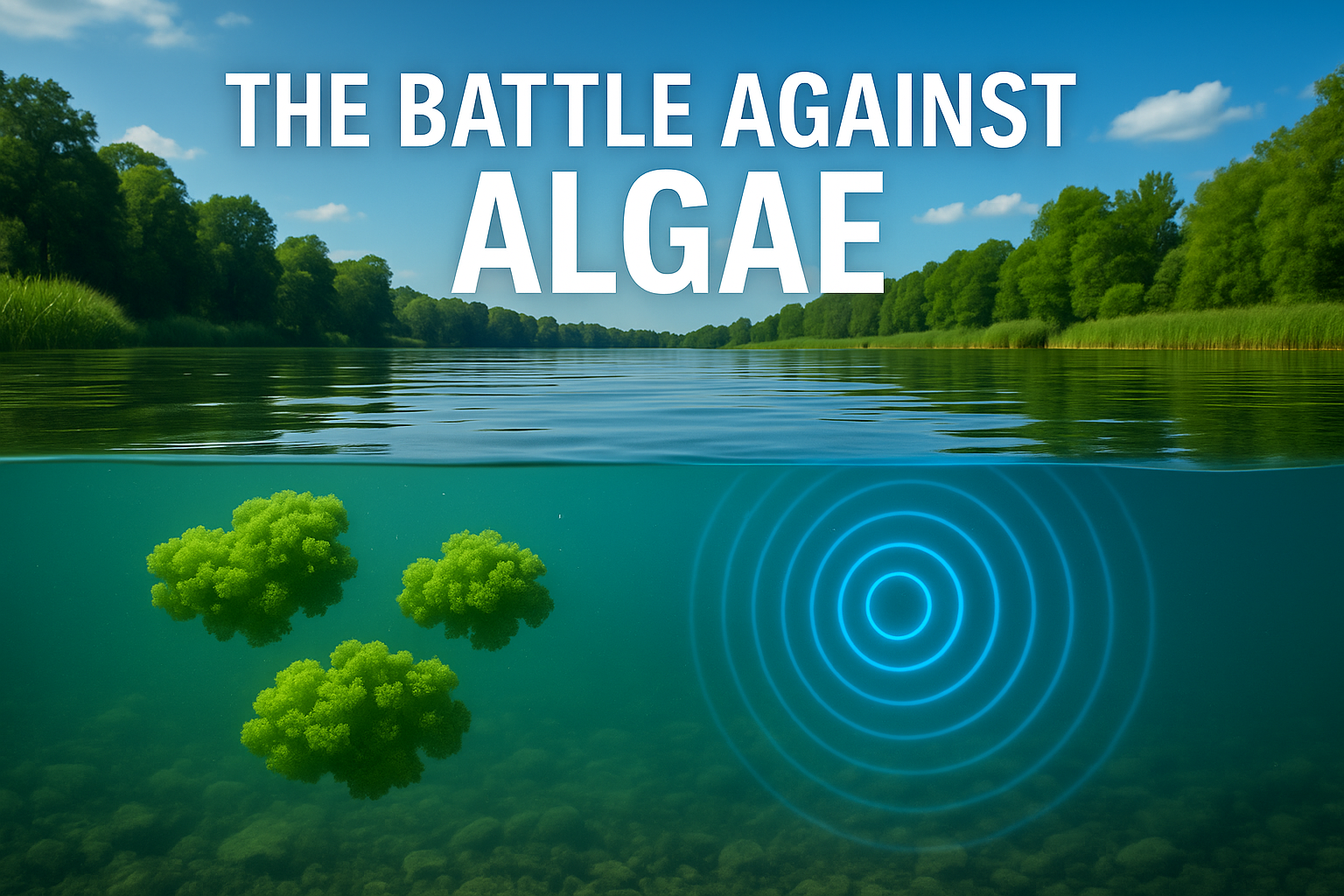
The Battle Against Algae
Anyone responsible for a lake or pond knows how difficult it is to keep water clear. I see this come up across irrigation basins, golf course hazards, and community lakes. If the water is not actively managed, algae take over quickly. That usually leads to strong odors, surface scum, and conditions that can become unsafe for people, pets, and wildlife.
For a long time, the only option has been a repeating cycle of chemical treatments, lab testing, and ongoing maintenance. That approach takes time and money, and it rarely feels permanent. You treat the problem, things improve briefly, and then the algae come back. The work never really ends.
A Smarter, Sustainable Solution
I started looking more closely at alternatives because of that cycle. Ultrasound technology stood out as a distinct approach to algae control. Instead of adding copper or other chemicals to the water, ultrasound works continuously in the background. It operates quietly, requires minimal hands-on maintenance, and does not leave residual contamination.
The system also collects water-quality data automatically and reports it online. That changes how water can be monitored day to day, reducing the need for constant manual checks.
The Scope of the Problem
Most serious problems are caused by blue-green algae, also known as cyanobacteria. It shows up almost everywhere and has become a growing concern for homeowners' associations, golf courses, parks, municipalities, private estates, farms, irrigation ponds, public gardens, and water features.
As water temperatures increase, algae outbreaks become more frequent and last longer. Even areas that used to deal with algae only during the warmest months are now managing it well beyond summer. For lake managers, that usually means more chemicals, more labor, and higher costs.
Why Chemicals Fall Short
Chemical treatments come with their own set of issues. They can harm the surrounding environment and require protective equipment during application. There is also public concern whenever chemicals are introduced into shared water spaces.
When algae are killed chemically, they release toxins into the water. That can worsen odors, encourage bacterial growth, and create additional cleanup work. In practice, what is meant to solve the problem often creates new ones.
The Ultrasound Difference
Ultrasound works differently. It disrupts algae at the cellular level, which prevents them from floating, reproducing, or forming blooms. Fish, plants, and beneficial bacteria are not affected. Over time, the algae sink to the bottom, and water clarity improves naturally.
Modern ultrasound systems are far more precise than earlier versions. They can emit thousands of distinct frequencies, each designed to target different types of algae. That level of precision makes treatment more effective and reduces the need for intervention. The system runs continuously, adjusting as conditions change.
Intelligent Monitoring, Effortless Operation
Monitoring is built into the process. SonicPure® systems can integrate sensors that measure algae density, pH, turbidity, and other indicators of water quality. That data is transmitted wirelessly to the cloud, enabling real-time visibility into what is happening.
There is no need for manual sampling or waiting on lab results. Water managers can monitor conditions and respond in real time.
Why SonicPure®
From a practical standpoint, this changes how water management is handled. Reduced labor, fewer chemical treatments, and healthier water add up over time. The systems are designed to last for years, which shifts the focus away from constant short-term fixes.
For anyone responsible for maintaining the safety and appearance of a lake or pond, this approach offers a more stable, manageable way to address algae without relying on repeated chemical interventions.

.svg)