Yes, We Control Biofilm Too

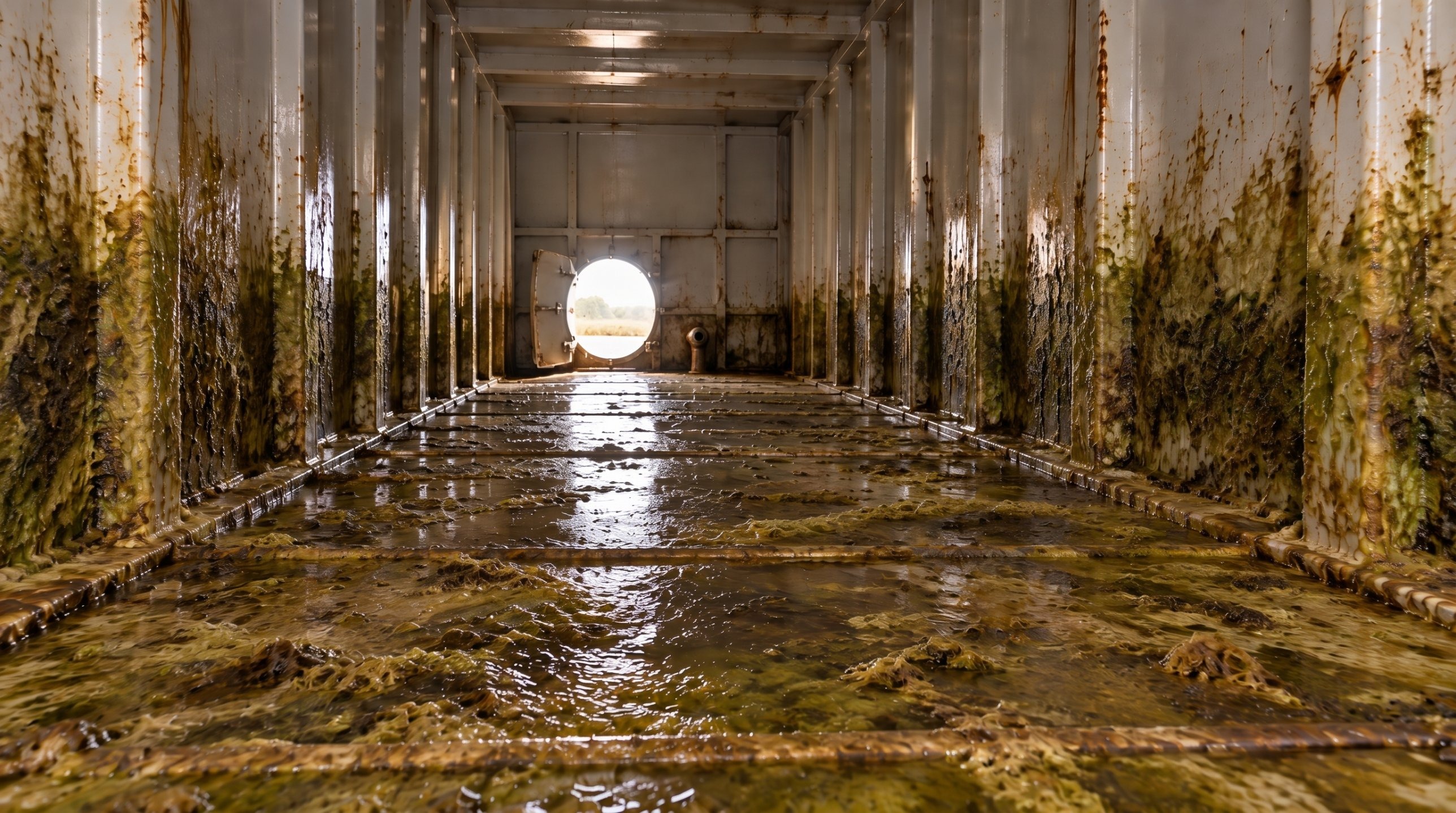
Ever slipped on a rock in a stream? That slippery coating is often biofilm. Now imagine the same biological buildup growing inside industrial storage tanks, coating equipment, trapping solids, and contributing to corrosion. It’s an expensive problem that sends operators back to the same cycle of chemical treatments, cleaning crews, and equipment downtime.
Here’s something you may not know: the same SonicPure ultrasound technology used to combat algae and cyanobacteria (blue-green algae) also controls biofilm. And rather than waiting for buildup to become another maintenance problem, our continuous, chemical-free ultrasound works around the clock to suppress biological growth on submerged surfaces, keeping equipment cleaner longer and reducing the need for repeated intervention.
The Costs Go Far Beyond Cleaning
Biofilm begins when microorganisms attach to submerged surfaces and produce a sticky, protective layer. As it grows, that layer traps organic material and suspended solids, creating the slime and buildup commonly found on tank walls, floors, and submerged equipment. It also makes the biological community harder to reach with chemical treatments.
For industrial operators, the financial consequences add up quickly. Biological fouling contributes to restricted flow and clogged filters, while recurring cleaning consumes labor and chemicals. Cleaning an industrial tank often involves draining, removing accumulated material, washing down surfaces, disposing of waste, and returning the equipment to service. For companies operating rental tank fleets, the expense doesn’t end with the cleaning crew. Every additional day a tank is unavailable for its next assignment affects its earning potential.
One of the more serious consequences is microbiologically influenced corrosion (MIC). As biofilm develops, its outer layer consumes oxygen, creating oxygen-depleted conditions beneath it where sulfate-reducing and iron-reducing bacteria can thrive. Their activity contributes to localized corrosion and pitting against steel surfaces. Unlike ordinary fouling, this damage cannot simply be washed away. Pitted tank floors and deteriorating equipment can require expensive repairs or premature replacement, and unexpected failures can take valuable assets out of service.
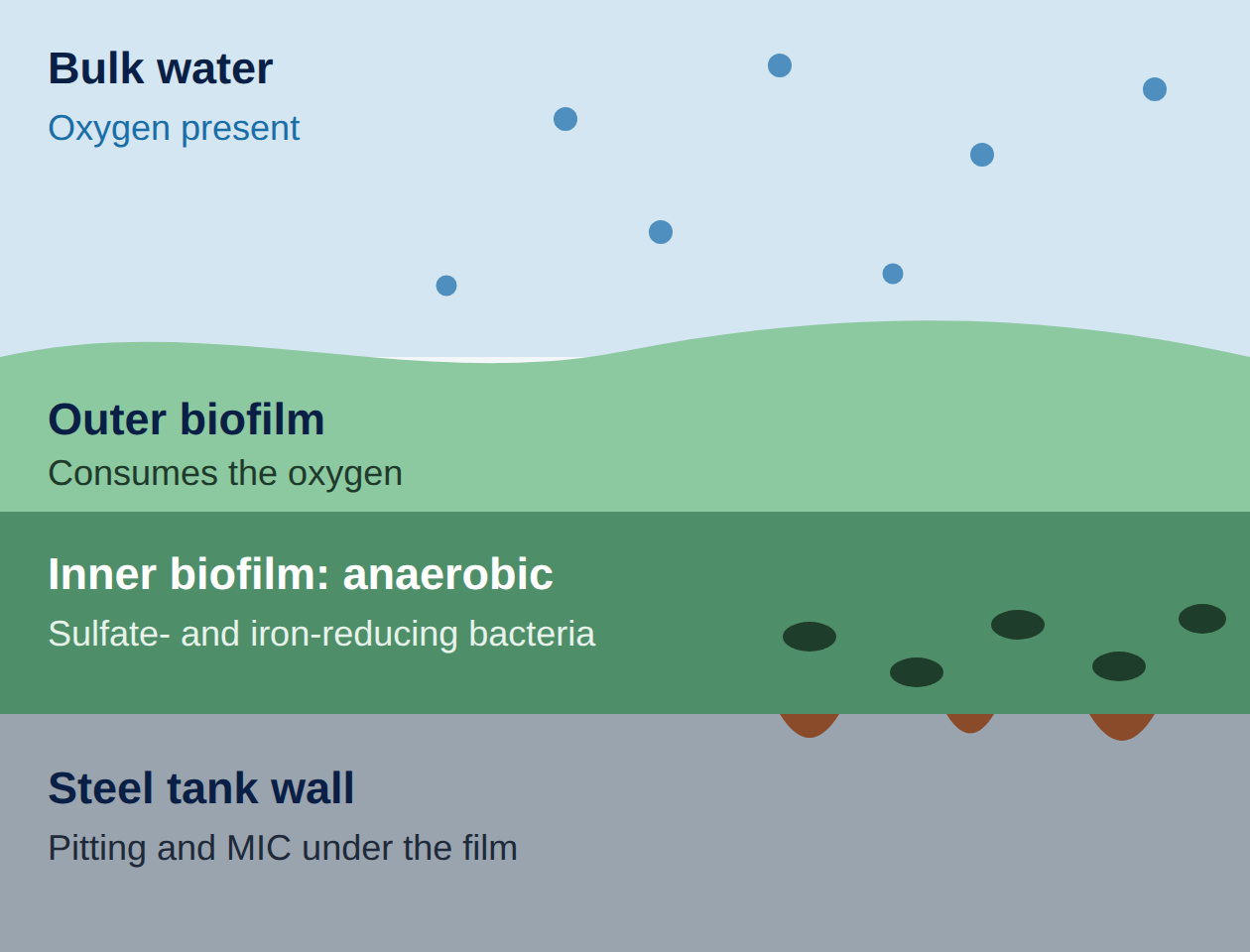
For tank owners, controlling biofilm is therefore about more than reducing cleaning frequency. It also means reducing a key biological contributor to MIC and protecting the equipment they depend on to operate and generate revenue.
Continuous Ultrasound Changes the Approach
Most industrial biofilm management relies on a combination of chemical treatments and periodic physical cleaning. Both have their place, but chemicals that control microorganisms suspended in the water don’t necessarily eliminate biological communities attached to submerged surfaces. Once biofilm develops its protective matrix, it becomes harder for chemicals to penetrate and control the organisms living within it.
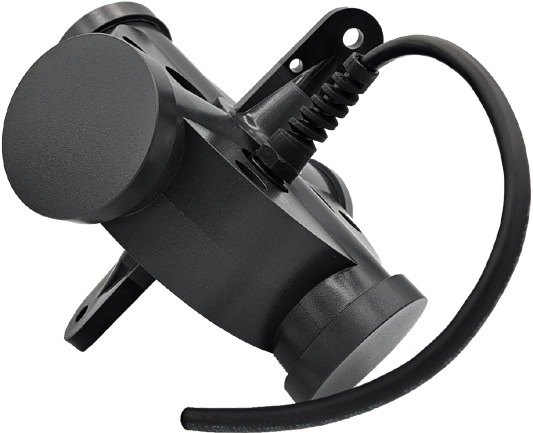
SonicPure's Pulsar 4400 takes a different approach. Operating continuously with approximately 4,400 targeted ultrasonic frequencies, it disrupts microbial attachment and interferes with the development of the protective matrix that allows biofilm to accumulate. Rather than allowing thick biological growth to develop between cleaning cycles, ultrasound suppresses that accumulation around the clock.
Independent research has demonstrated that low-intensity ultrasound inhibits biofilm development in water-handling systems, including reducing the strength of biological attachment to submerged surfaces. Other industrial-water research has shown that controlling bacteria suspended in the water and controlling attached biofilm are different treatment objectives.
The operating advantage is continuous control of the biological layer that contributes to fouling and traps other materials. By keeping tank walls, floors, and submerged equipment cleaner longer, SonicPure extends cleaning intervals and reduces the labor associated with recurring maintenance. It also gives operators a way to reduce reliance on chemical treatments directed at biological growth while complementing the rest of their water treatment program.
What Happens When Biofilm Doesn’t Come Back?
In an industrial storage-tank application, we put SonicPure to work in a tank that had experienced biological buildup. The tank was cleaned, but not sanitized, before a single Pulsar 4400 was installed for continuous control.
The results demonstrate the value of continuous ultrasonic control after cleaning: suppressing the return of biological growth rather than repeatedly removing it.
For a tank owner or rental company, consider what longer periods without biological buildup could mean. Fewer cleaning cycles reduce labor and wash-water demand. Less time preparing tanks for reuse improves turnaround and equipment availability. Controlling biofilm also reduces the biological conditions that contribute to MIC, providing another layer of protection for valuable assets.
We’ve seen similar benefits in other applications. At a Union City clarifier, cleaning intervals increased from two weeks to six weeks, substantially reducing manual scrubbing. In water treatment basins in Searcy, Arkansas, cleaning intervals increased from 30 days to more than 60 days, while chemical use in the affected basins was reduced to nearly zero.
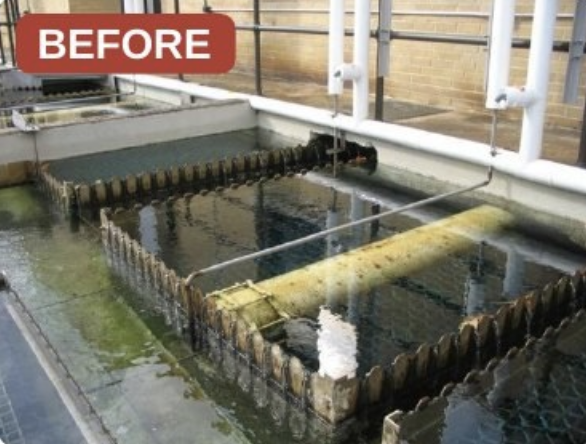
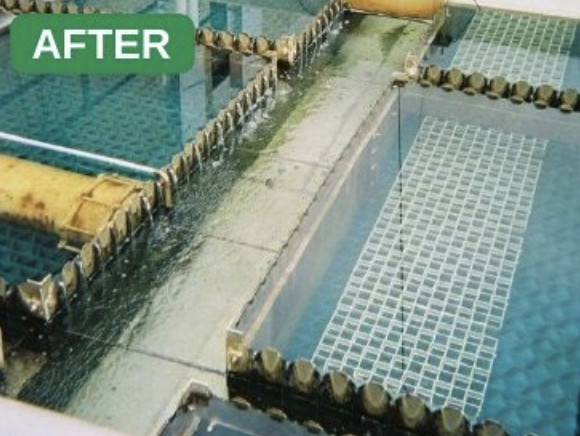
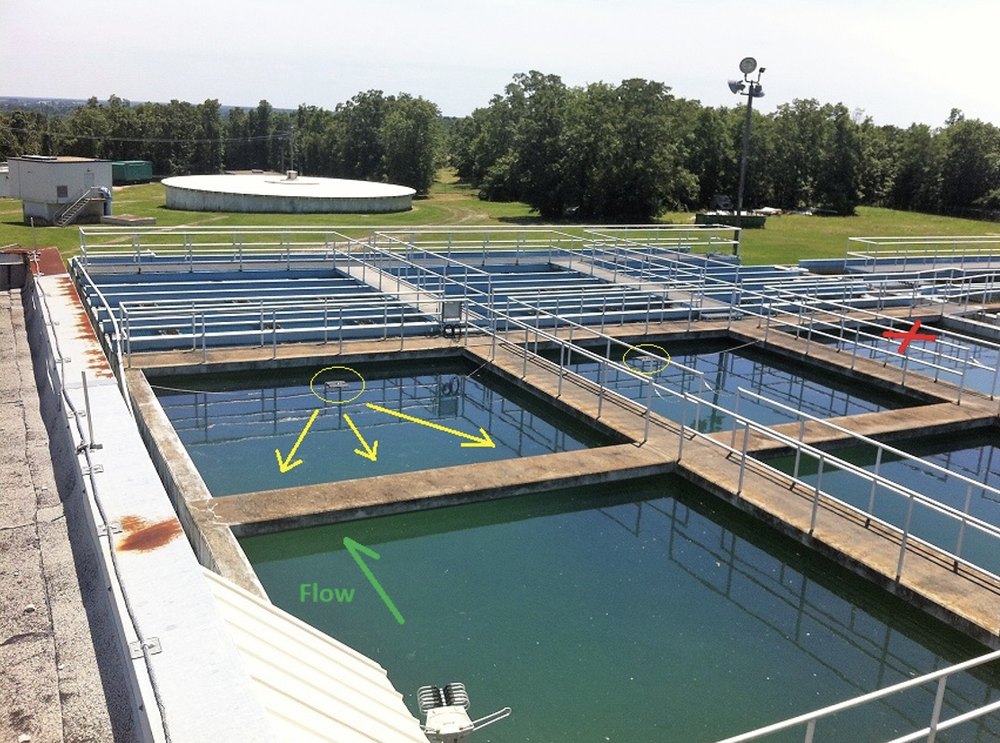
These field results demonstrate that controlling biological growth continuously can change how facilities manage recurring cleaning and maintenance. Instead of accepting biological buildup as an unavoidable expense, operators have another way to keep it under control.
Protecting Tanks, Reducing Costs, Improving Operations
The opportunity extends well beyond conventional water treatment. Biofilm affects industrial storage tanks, refinery and process-water systems, wastewater basins, reuse facilities, and other applications where submerged surfaces remain exposed to biologically active water. The same challenges are relevant to produced-water storage and frac tanks, where tank cleanliness, turnaround, and equipment integrity have significant operating and financial implications.
For companies that own, operate, or rent industrial storage tanks, controlling biofilm means reducing recurring cleaning expenses, keeping tanks available for productive use, and protecting valuable equipment from a key biological contributor to MIC. Rather than repeatedly paying to remove the same buildup, continuous ultrasonic control addresses the biological growth that makes those interventions necessary.
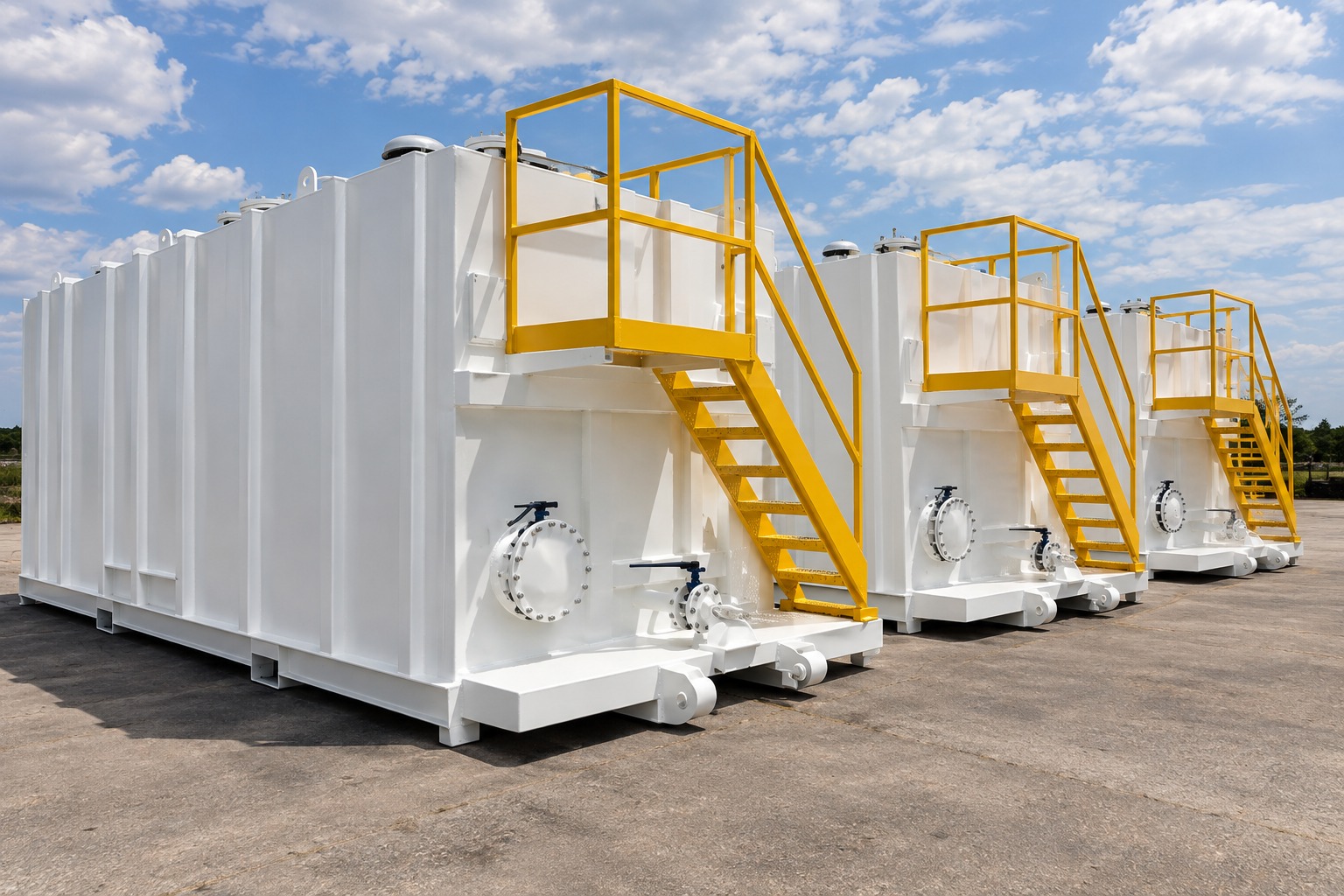
SonicPure systems are easy to deploy and simple to operate, with minimal maintenance required. Purchase and rental options are available (rentals available in the US only), with configurations selected for each site’s tank geometry, water depth, circulation, and operating conditions.
Many people already know SonicPure for algae and cyanobacteria control. What they may not realize is how valuable that same technology can be in industrial applications where biofilm drives recurring maintenance costs and threatens equipment integrity.
If you’re repeatedly cleaning the same tanks, spending money on chemical treatments, or dealing with biological fouling and MIC concerns, why continue managing the problem the same way? SonicPure offers continuous, chemical-free control that can reduce your operating burden, protect valuable tank assets, and improve your existing treatment program.
Contact SonicPure at sales@sonicpure.com or +1 (310) 955-4005 to discuss your application, or request a quote.