



Blue-Green Algae Is More Than Ugly Water

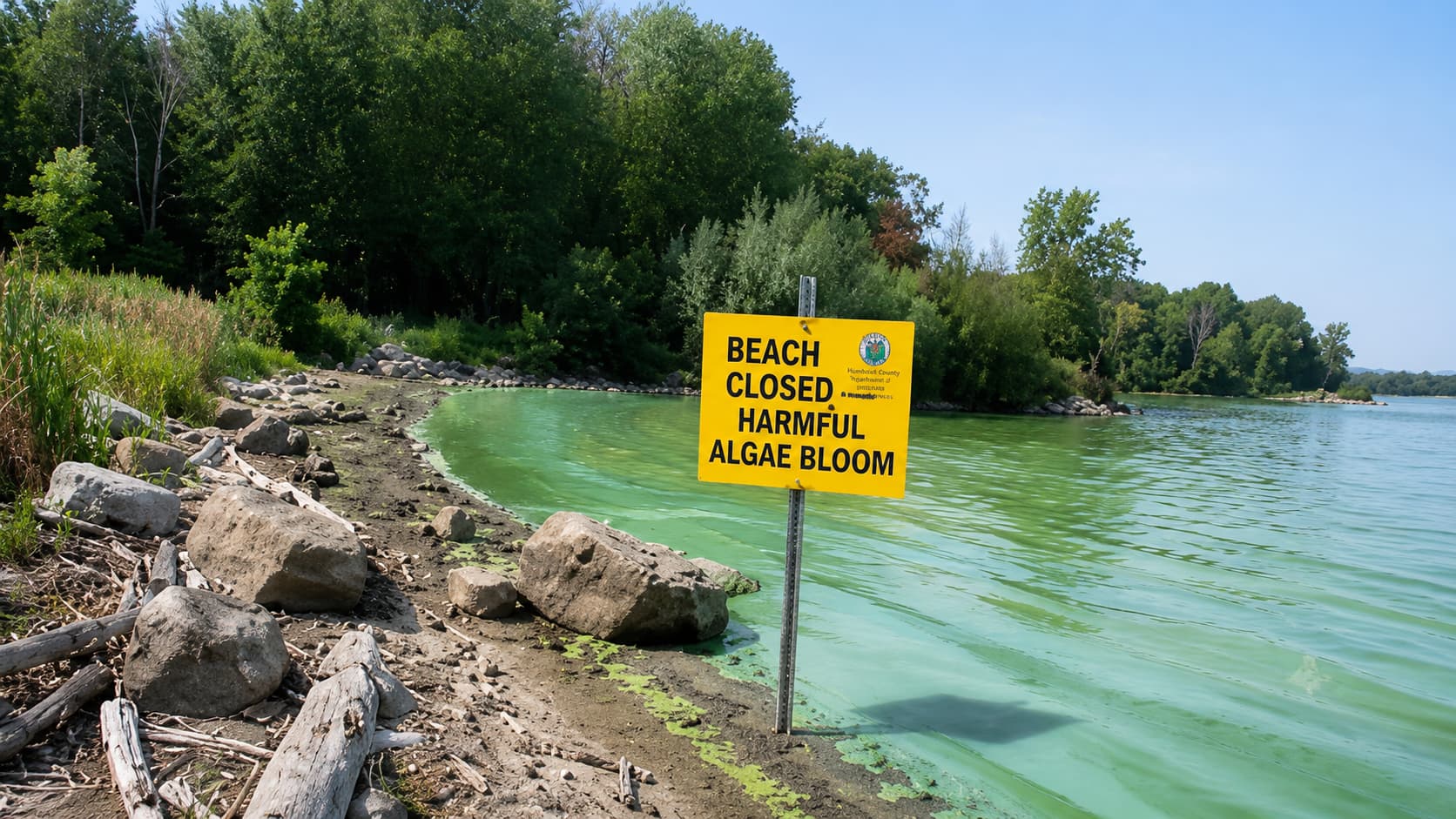
On July 23, a dog died shortly after swimming in a slow, stagnant pool connected to California’s Eel River. Humboldt County health officials quickly warned residents to keep children, pets, and livestock away from water containing algae mats or scum. The county had issued a similar warning in 2024 after two dogs died shortly after swimming in another section of the Eel River.
These were not industrial waste sites or remote bodies of water. They were the kinds of rivers, lakes, ponds, and reservoirs where families swim, fish, paddle, and let their dogs cool off on a hot afternoon.
Yet many people still see blue-green algae as ugly water, a seasonal nuisance, or an inconvenience that can be handled with another warning sign. That seriously understates the risk. Cyanobacteria can poison pets, make people sick, kill fish and wildlife, disrupt drinking-water supplies, close public waters, and damage the communities that depend on them. The risks are real, the harm is happening now, and by the time the public recognizes the danger, the bloom may already be established.
Blue-green algae is not actually algae. It is cyanobacteria, and some types produce powerful toxins. Blooms may resemble spilled green paint, pea soup, floating grass clippings, foam, or thick green, blue, brown, or black mats. Wind can push the material into coves and along shorelines, creating highly concentrated pockets in the same shallow water where children play and dogs drink. When water becomes discolored, develops a paint-like film, smells unusual, or collects thick scum along the shore, the problem is no longer cosmetic. It is a warning to stay out.
The Risk Reaches Far Beyond the Shoreline

Dogs are often the first in the water and among the most likely to ingest dangerous levels of cyanobacterial toxins. Nothing tells them that green scum or discolored water may be unsafe. They gulp warm shoreline water, bite at floating mats, swim through scum, and then lick contaminated water from their coats. By the time an owner notices vomiting, excessive drooling, staggering, tremors, weakness, or difficulty breathing, the poisoning may already be severe. Depending on the toxin, symptoms can develop within minutes or hours.
Many people are unaware of the different ways cyanotoxins can make them sick. They can cause skin and eye irritation, stomach illness, coughing, numbness, weakness, and damage to the liver or nervous system. Exposure can happen through swimming, swallowing contaminated water, or breathing tiny droplets produced by spray and wave action.
Think you have to swim in contaminated water to be exposed? Maybe not. Researchers in Florida have detected cyanobacterial toxins and related compounds in the air near bloom-affected water, suggesting that wind and spray may carry the danger beyond the shoreline. Scientists are still determining what repeated exposure may mean for people, but the finding is unsettling: someone may be breathing bloom-related toxins without ever stepping into the water.
The questions do not end with rashes, vomiting, or liver damage. Scientists are now asking what repeated exposure could do to the brain. In a 2025 study of dolphins from Florida’s Indian River Lagoon, one cyanobacteria-linked neurotoxin was nearly 2,900 times more concentrated during bloom season. The dolphins also showed Alzheimer’s-like changes in their brains. The study does not prove that cyanobacteria cause Alzheimer’s in people, but it raises troubling questions about risks we may still be underestimating.
And this is not just a U.S. problem. Toxic cyanobacteria are closing lakes, threatening drinking water, and putting people and animals at risk around the world. The World Health Organization now treats bloom prevention as an important public-health priority.
Warning Signs and Closures Are Not Bloom Control
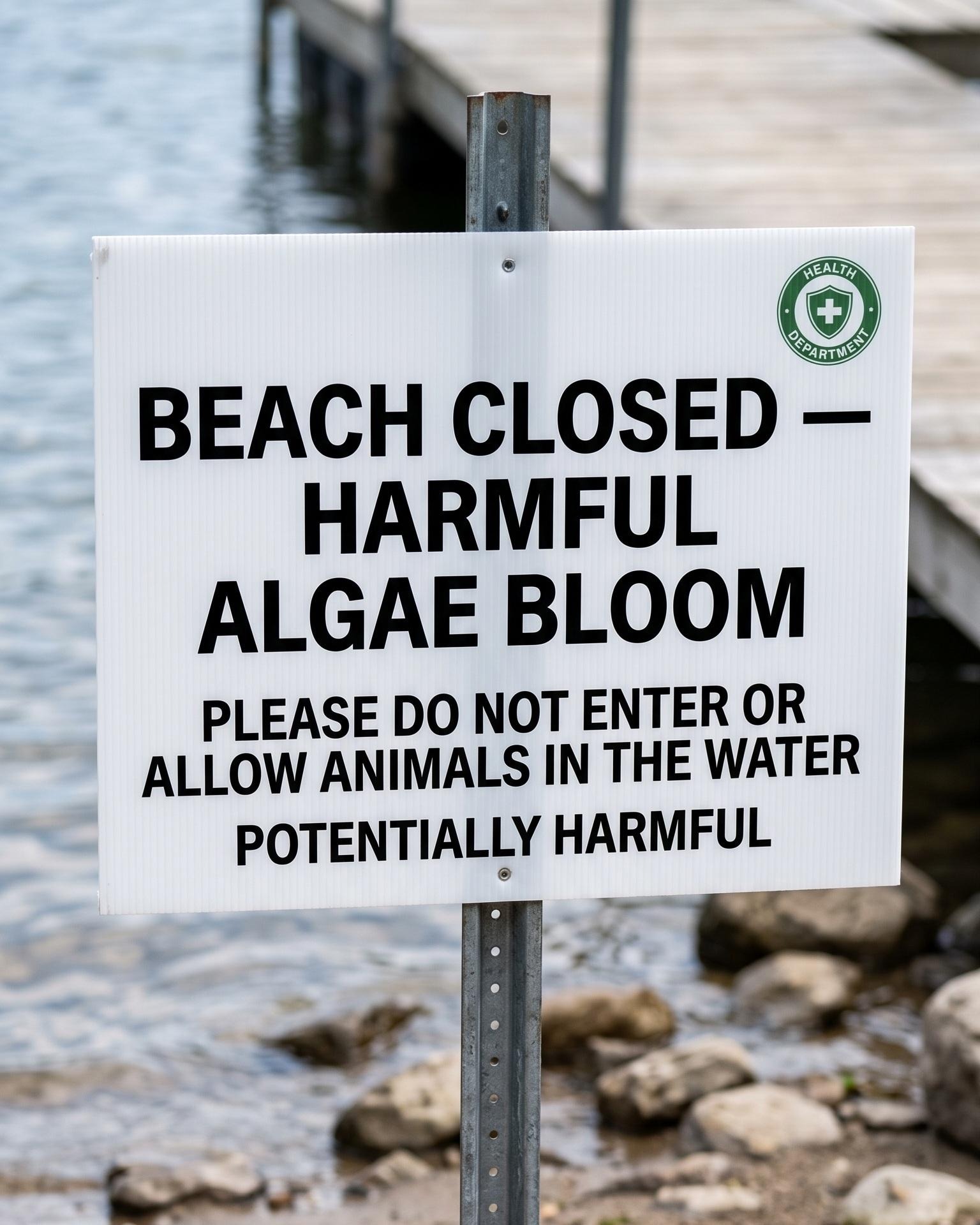
Across the country, health departments and water managers are already sampling water, posting advisories, closing beaches, and warning people to keep pets away when blooms are identified. That work is necessary and protects the public, but it begins after the problem has developed. By the time a sign goes up, cyanobacteria may already be established, pets and wildlife may already have encountered it, and families and businesses may already have lost access to the water. A warning protects the next visitor. It does not control the bloom, restore the water, or stop it from returning.
Monitoring tells us when the danger is present. It does not make the danger go away.

.svg)